

If you’ve ever spotted that vibrant green swirl in a café latte or on a dessert menu and wondered what does matcha taste like, you’re definitely not alone. Matcha has exploded in popularity across coffee shops, wellness routines, and home kitchens but its flavor is often misunderstood. Some people describe it as grassy, others say creamy, and a few warn that it’s bitter. So which is it?
The truth is: matcha is complex. Its taste depends on quality, preparation, and how it’s consumed. Unlike most teas, matcha isn’t steeped and discarded you drink the entire tea leaf, ground into a fine powder. That alone makes the flavor experience deeper and more intense.
This guide breaks down exactly what matcha tastes like, why it tastes that way, and how you can enjoy it in different forms, from traditional tea to modern desserts.
What Does Matcha Taste Like at Its Core?
At its foundation, matcha has a rich, grassy, vegetal flavor that’s often compared to fresh spinach, wheatgrass, or steamed greens. But that’s only the starting point.
High-quality matcha delivers a layered flavor profile that includes:
- Mild natural sweetness
- Earthy, green notes
- A gentle bitterness
- A creamy, savory umami finish
This balance of sweet, bitter, and savory is what makes matcha so distinctive. Unlike black tea or coffee, matcha doesn’t hit with sharp acidity. Instead, it feels smooth, rounded, and lingering on the palate.
Why Matcha Tastes Different From Other Teas
To understand what matcha tastes like, it helps to know how it’s made.
Matcha comes from shade-grown green tea leaves. For several weeks before harvest, the tea plants are covered to block direct sunlight. This process boosts chlorophyll and amino acids, especially L-theanine, which plays a major role in matcha’s umami and sweetness.
After harvesting, the leaves are steamed, dried, and stone-ground into an ultra-fine powder. Because you consume the whole leaf rather than an infusion, the flavor is stronger, richer, and more concentrated than traditional green tea.
Sweetness, Bitterness, and Umami: Matcha’s Flavor Balance
Sweet Notes
Good matcha has a subtle, natural sweetness—nothing sugary, but more like fresh grass or young peas. This sweetness is most noticeable in high-grade matcha and becomes more pronounced when prepared correctly.
Bitterness
Yes, matcha can be bitter—but bitterness isn’t a flaw on its own. A slight bitterness adds structure and contrast. Problems arise when bitterness overwhelms everything else, which often happens with lower-quality matcha or improper preparation.
Umami Finish
Umami is what sets matcha apart. It’s a savory, creamy depth that lingers after each sip. This quality gives matcha its smooth mouthfeel and makes it feel comforting rather than harsh.
How Matcha Quality Impacts Taste
One of the biggest factors affecting what matcha tastes like is quality.
- High-quality matcha tastes smooth, creamy, mildly sweet, and umami-rich with minimal bitterness.
- Lower-quality matcha tends to taste sharp, chalky, overly grassy, or astringent.
Color is often a clue. Vibrant, bright green matcha usually signals freshness and higher chlorophyll content, while dull or yellowish-green powder often tastes flat or bitter.
Preparation Matters More Than You Think
Even excellent matcha can taste unpleasant if prepared incorrectly. Small details make a huge difference.
Water Temperature
Using boiling water scorches the powder and intensifies bitterness. The ideal range is 160–175°F (70–80°C), which preserves sweetness and umami.
Sifting the Powder
Matcha clumps easily. Sifting before whisking ensures a smoother texture and more even flavor.
Whisking Technique
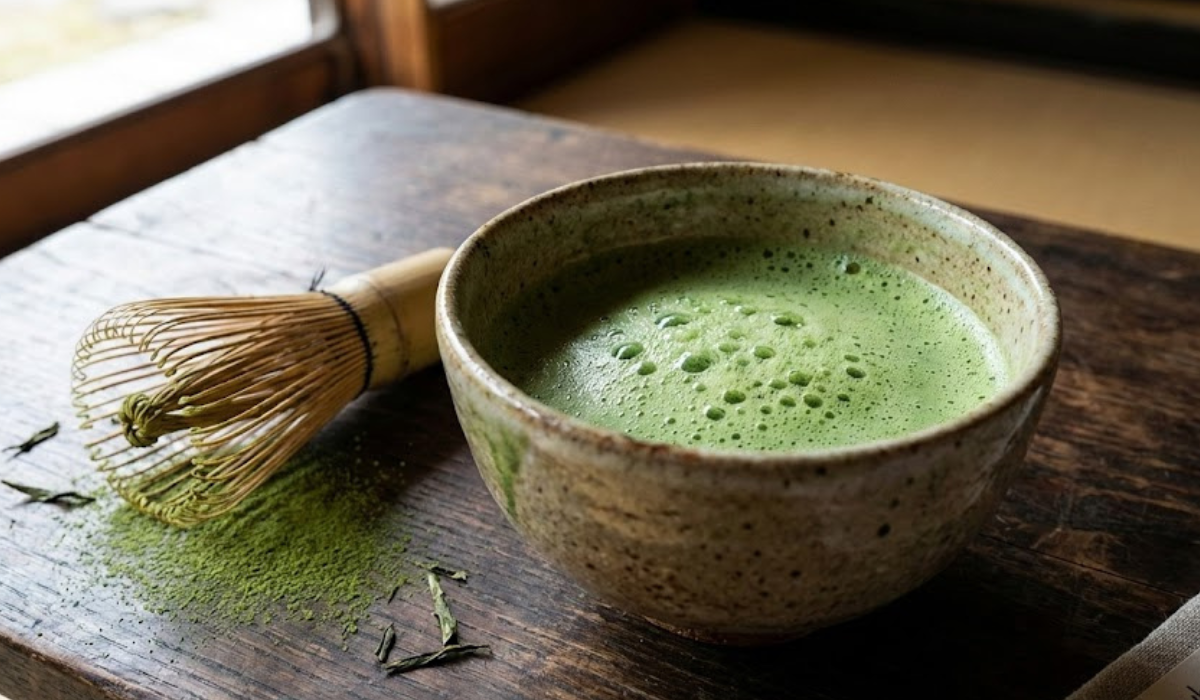
A zig-zag (M or W-shaped) motion helps incorporate air, creating a light foam that softens the flavor. This is where traditional matcha accessories, like a bamboo whisk (chasen), really shine.
What Does Matcha Taste Like in Different Forms?
Traditional Hot Matcha
Warm, earthy, and deeply green with a creamy finish. This is the purest way to experience matcha’s natural flavor.
Matcha Latte
Milk (dairy or plant-based) adds sweetness and mellows bitterness. Lattes highlight matcha’s creamy side and are often easier for beginners.
Iced Matcha
Cool and refreshing, iced matcha emphasizes grassy and vegetal notes while softening intensity.
Matcha Desserts
In baked goods and desserts, matcha tastes more like a subtle green tea flavor with earthy sweetness. Bitterness is minimal, and the umami becomes background depth.
Why Some People Love Matcha and Others Don’t
Matcha is an acquired taste for some. People who enjoy green vegetables, dark chocolate, or black coffee often appreciate matcha’s complexity. Those expecting something fruity or sugary may be surprised.
Many people grow to love matcha once they learn how to prepare it properly and choose a smoother powder. Over time, the layered flavor becomes comforting and even addictive.
Beyond Taste: Why People Keep Drinking Matcha
While this article focuses on what does matcha taste like, flavor isn’t the only reason people return to it.
Matcha is often associated with:
- Calm, focused energy
- Antioxidant content
- A sense of ritual and mindfulness
These benefits, combined with its unique taste, make matcha more than just a drink—it becomes a daily habit for many.
How to Improve Your Matcha Experience
If your first sip didn’t win you over, don’t give up. Try adjusting:
- Water temperature
- Matcha amount
- Milk or sweetener ratios
- Preparation tools
Reading matcha powder reviews and experimenting with different styles can completely change your perception of the flavor.
Informational FAQs About Matcha Taste
What does matcha taste like compared to green tea?
Matcha is more intense, creamy, and umami-rich because you consume the whole leaf instead of steeping it.
Is matcha supposed to taste bitter?
A little bitterness is normal, but overpowering bitterness usually means low quality or water that’s too hot.
Does matcha taste sweet?
High-quality matcha has a natural, mild sweetness without added sugar.
Why does my matcha taste fishy or chalky?
This can happen with old or low-grade matcha, or if it’s not sifted properly.
Does matcha taste better hot or cold?
That’s personal preference. Hot matcha highlights umami, while cold matcha tastes fresher and lighter.
Can beginners enjoy matcha?
Yes. Starting with matcha lattes or desserts can help new drinkers ease into the flavor.