

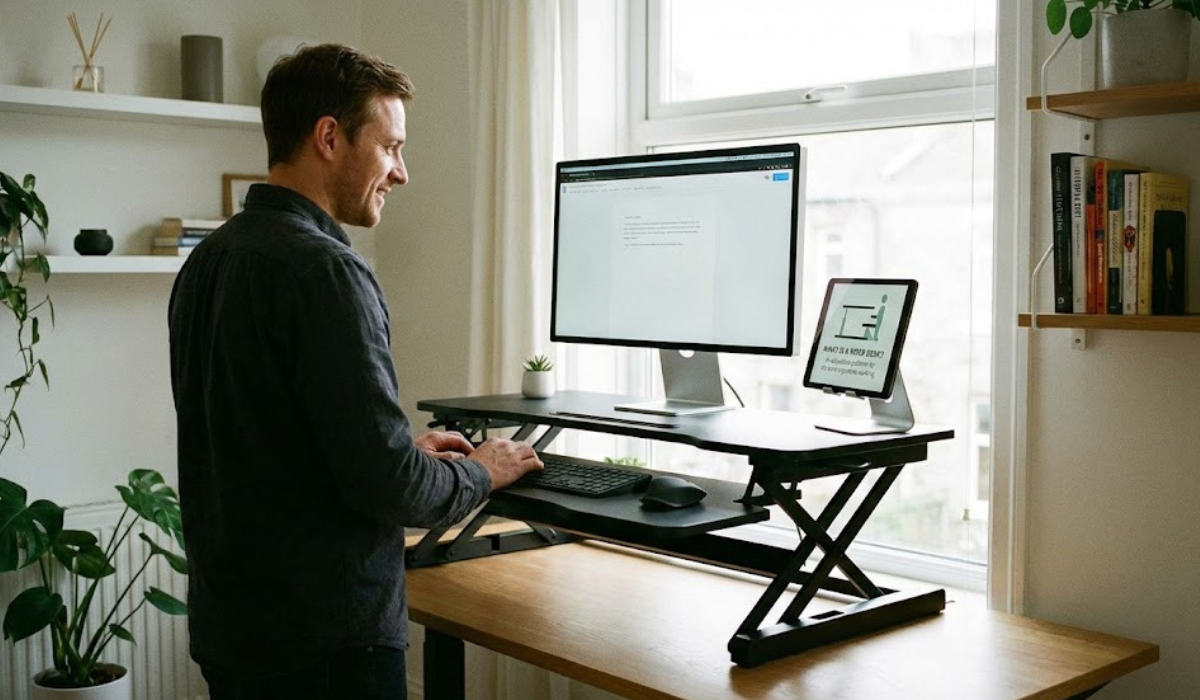
As more people spend long hours working at computers, questions about comfort, posture, and long-term health have become increasingly important. One question that often comes up is: what is a riser desk? While the term may sound technical at first, a riser desk is actually a simple concept that plays a significant role in modern workspace ergonomics.
This article provides a detailed, informational explanation of what a riser desk is, how it works, why people use it, and how it fits into today’s work environments. Whether you work from home, in an office, or study for long hours, understanding riser desks can help you make informed decisions about your workspace setup.
Understanding What a Riser Desk Is
To begin with, a riser desk is an accessory or adjustable platform designed to raise the height of a work surface, usually to allow a person to work while standing or to improve sitting posture. Unlike traditional desks that stay at one fixed height, a riser desk gives users flexibility in how they position their workspace.
In most cases, a riser desk sits on top of an existing desk. It elevates items such as a computer monitor, keyboard, mouse, or laptop to a more ergonomic height. Some models allow smooth transitions between sitting and standing positions, while others are designed to stay at one raised level.
When people ask what is a riser desk, they are often referring to a practical solution for reducing prolonged sitting without replacing an entire desk.
How a Riser Desk Works
A riser desk works by adding vertical adjustability to a standard desk setup. Depending on the design, this adjustment can be done manually, mechanically, or with assisted lifting systems.
Some riser desks use simple platforms with fixed legs that raise the desk surface by a set amount. Others include scissor mechanisms, gas springs, or counterbalance systems that allow the user to lift or lower the platform smoothly.
The main goal is to position the workspace so that:
- The monitor is at or near eye level
- The keyboard and mouse allow neutral wrist positioning
- The user can alternate between sitting and standing comfortably
This adaptability is what makes riser desks appealing to people looking for ergonomic improvements without making permanent changes to their furniture.
Why Riser Desks Have Become Popular
The growing interest in riser desks is closely tied to increased awareness of sedentary lifestyles. Many jobs now require sitting for extended periods, which can lead to discomfort and strain over time.
Riser desks became popular because they offer:
- Greater flexibility in posture
- A simple way to introduce movement into the workday
- Compatibility with existing desks
Rather than committing to a full standing desk, many users prefer a riser desk as a practical middle option. It allows them to test standing work habits without significant cost or disruption.
The Distinction Between a Riser Desk & a Standing Desk
A common point of confusion when asking what is a riser desk is is how it differs from a standing desk.
A standing desk is a complete desk designed to be used while standing, often with built-in height adjustment. A riser desk, on the other hand, is typically an add-on that sits on top of a regular desk.
Key differences include:
- Riser desks are usually portable, while standing desks are larger and more permanent
- Riser desks rely on an existing desk, whereas standing desks replace one
- Riser desks are often smaller, supporting just work essentials
Both serve similar ergonomic purposes, but riser desks are often chosen for their flexibility and ease of use.
Types of Riser Desks
Riser desks come in several designs, each suited to different needs and work styles.
Fixed Riser Desks
These models raise the workspace to a single height. They are simple and stable but do not allow switching between sitting and standing.
Adjustable Riser Desks
These allow users to change height levels, making them ideal for alternating positions during the day.
Desktop Converters
Often referred to as sit-stand converters, these are among the most popular riser desk designs. They support monitors, keyboards, and other accessories.
Laptop Riser Platforms
Designed mainly for laptops, these riser desks improve screen height and airflow while maintaining portability.
Each type addresses specific ergonomic concerns, but all share the same core purpose: elevating the workspace.
How Riser Desks Support Ergonomics
Ergonomics is the science of designing workspaces to fit human needs, and riser desks play an important role in this area.
By adjusting desk height, a riser desk helps reduce:
- Neck strain from looking down at screens
- Shoulder tension caused by poor arm positioning
- Slouching and rounded posture
A properly adjusted riser desk encourages a more natural alignment of the spine, head, and arms. While it is not a medical solution, it is often considered a helpful tool for creating a healthier workspace.
Common Environments Where Riser Desks Are Used
Riser desks are not limited to one type of setting. They can be encountered in multiple domains, including:
- Home offices
- Corporate workspaces
- Educational institutions
- Creative studios
- Libraries and shared work areas
Because riser desks are often portable and adjustable, they adapt well to both permanent and temporary setups.
Practical Considerations When Using a Riser Desk
Understanding what is a riser desk also involves knowing how to use one effectively.
Proper use includes:
- Adjusting the monitor to eye level
- Keeping elbows at roughly a 90-degree angle
- Standing on a stable surface
- Avoiding prolonged standing without movement
It is generally recommended to alternate between sitting and standing rather than remaining in one position all day.
Limitations of Riser Desks
While riser desks offer many advantages, they are not perfect for every situation.
Some limitations include:
- Limited surface space compared to full desks
- Weight capacity restrictions
- Potential instability if overloaded
- The need for careful adjustment
Being aware of these factors helps users set realistic expectations.
The Role of Riser Desks in Modern Work Culture
As flexible and remote work continues to grow, riser desks have become part of a broader shift toward adaptable workspaces. They reflect a move away from rigid office layouts and toward environments that prioritize comfort, movement, and individual preference.
Rather than being a trend, riser desks are increasingly seen as a practical response to changing work habits.
Informational FAQs About Riser Desks
What is a riser desk used for?
A riser desk is used to elevate a workspace, allowing better posture and the option to work while standing or sitting.
Is a riser desk the same as a standing desk?
No. A riser desk sits on top of an existing desk, while a standing desk is a full desk designed for standing use.
Can a riser desk help with posture?
A riser desk can support better posture by positioning screens and keyboards at ergonomic heights.
Are riser desks suitable for laptops?
Yes, many riser desks are designed specifically for laptops or can accommodate them with accessories.
Do riser desks require installation?
Most riser desks require minimal or no installation and can be used right out of the box.