

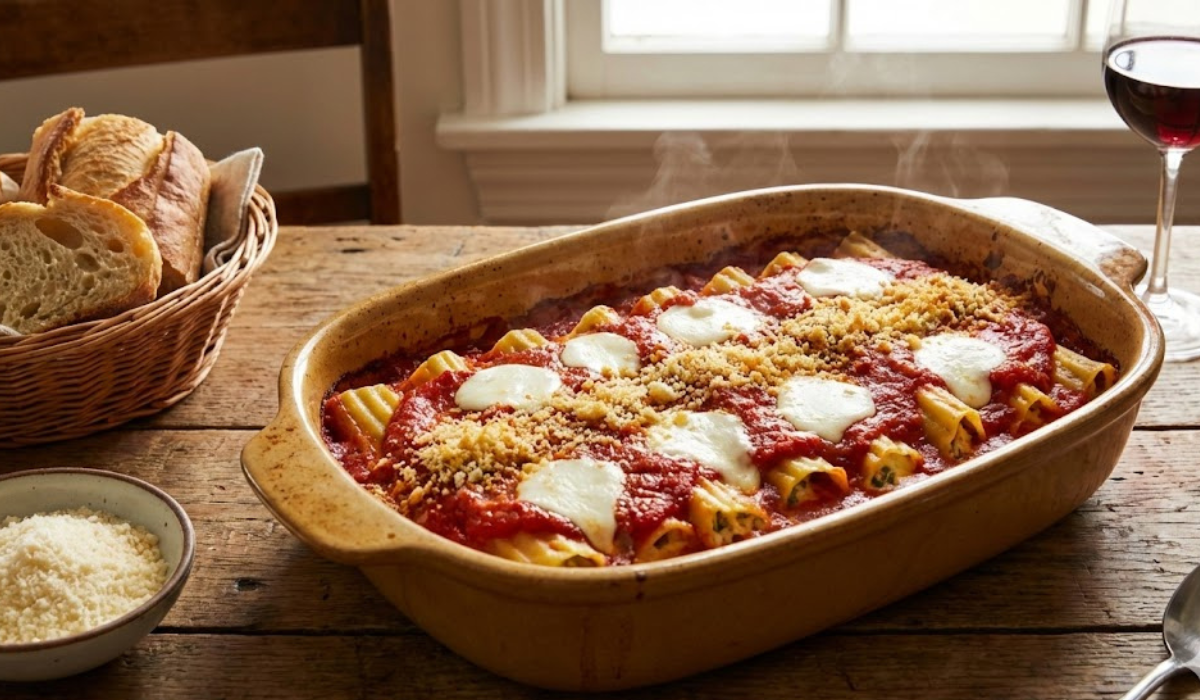
Mannacote is more than just a comforting baked pasta dish—it is a living example of how food traditions evolve, adapt, and endure across generations. Rooted in Italian culinary techniques yet shaped by Italian-American households, mannacote represents a fusion of heritage, practicality, and nutritional awareness. While it may not appear in classical Italian cookbooks, its presence on family tables tells a powerful story about identity, migration, and the everyday artistry of home cooking.
At its core, mannacote is a baked stuffed pasta dish traditionally filled with ricotta cheese and complementary ingredients, layered with tomato sauce and mozzarella, and baked until bubbling and golden. Though closely related to manicotti and cannelloni, mannacote occupies its own cultural space—one defined less by formal culinary taxonomy and more by lived experience.
Understanding Mannacote in Culinary Context
From a culinary classification perspective, mannacote belongs to pasta al forno, a broad category of oven-baked pasta dishes common throughout Italy. Pasta al forno includes lasagna, baked ziti, cannelloni, and manicotti, all of which rely on layering, stuffing, or binding pasta with sauces and cheeses before baking.
What distinguishes mannacote is not a radically different technique, but rather its linguistic and cultural evolution. The term “mannacote” is widely recognized as an Italian-American variant of “manicotti,” shaped by regional dialects, oral tradition, and generational pronunciation changes. Over time, the word became fixed within families, passed down through spoken language rather than written recipes.
This makes mannacote an excellent example of how culinary identity can persist outside formal culinary institutions, thriving instead in kitchens, notebooks, and shared meals.
The Anatomy of a Classic Mannacote
A traditional mannacote dish consists of several foundational elements:
- Pasta shells or tubes: Typically large, ridged tubes similar to manicotti or cannelloni, designed to hold substantial fillings.
- Ricotta-based filling: The heart of mannacote, usually made with ricotta cheese, eggs, herbs, and sometimes spinach or meat.
- Tomato sauce: Often slow-simmered, providing acidity and moisture.
- Mozzarella and grated cheeses: Used for both structure and flavor during baking.
Unlike restaurant-style manicotti, Italian-American mannacote fillings are often denser. Many households favor a higher ricotta-to-egg ratio, producing a filling that reheats well, holds its shape, and remains satisfying even as leftovers. This practical adjustment reflects a home-cooking mindset focused on nourishment, efficiency, and family needs.
Mannacote as a Nutritionally Balanced Dish
When examined thoughtfully, mannacote aligns surprisingly well with modern nutritional principles. Rather than being a simple indulgence, it offers a balance of macronutrients that can support a variety of dietary patterns.
Complex Carbohydrates
The pasta provides sustained energy, particularly when portioned mindfully. Whole-grain or high-protein pasta variations can further enhance nutritional value without altering the essence of the dish.
High-Quality Protein
Ricotta cheese delivers complete protein along with calcium and essential amino acids. When combined with eggs, spinach, or lean meats, mannacote becomes a protein-dense meal capable of supporting muscle maintenance and satiety.
Functional Fats
Cheese-based fats, when consumed in moderation, contribute to flavor, fullness, and nutrient absorption. Using high-quality dairy products allows for richness without excess.
Because of this balance, mannacote can fit comfortably into contemporary dietary frameworks, including Mediterranean-style eating and high-protein lifestyles. The key lies in ingredient quality, portion awareness, and thoughtful preparation.
Cultural Significance in Italian-American Households
Mannacote holds deep emotional and cultural value within Italian-American families. It is often associated with Sunday dinners, holidays, and gatherings where cooking is a shared, multi-generational activity. Recipes are rarely written in precise measurements; instead, they are taught through demonstration, memory, and taste.
This oral tradition reinforces family bonds while allowing subtle evolution. One generation might add more herbs, another might adjust the filling texture, but the identity of the dish remains intact. In this way, mannacote becomes both a culinary artifact and a living practice.
The preservation of the term “mannacote” itself is significant. While standardized Italian language favors “manicotti,” the continued use of “mannacote” reflects pride in Italian-American heritage and resistance to cultural erasure. It demonstrates how immigrant communities create their own authentic expressions, distinct yet deeply connected to their roots.
Adaptability and Modern Relevance
One of mannacote’s greatest strengths is its adaptability. It welcomes variation without losing its core identity. Fillings can be adjusted to accommodate dietary needs, seasonal ingredients, or personal preferences. Vegetarian versions featuring spinach or mushrooms are common, as are protein-forward variations using poultry or plant-based alternatives.
This flexibility makes mannacote especially relevant today, as modern eaters seek meals that are comforting, nutritionally credible, and customizable. It satisfies the desire for tradition while allowing alignment with health-conscious values.
Rather than being frozen in time, mannacote continues to evolve just as it always has.
Mannacote as Culinary Heritage, Not Trend
Unlike food trends that rise and fall, mannacote endures because it was never designed for mass appeal. Its survival depends on family kitchens, not menus or marketing. This authenticity gives it credibility in an era where consumers increasingly value experience, story, and cultural depth.
Mannacote reminds us that some of the most meaningful foods are not defined by strict authenticity or professional recognition, but by continuity by the simple act of being cooked, shared, and remembered.
Informational FAQs About Mannacote
What is mannacote?
Mannacote is an Italian-American baked stuffed pasta dish made with ricotta-based filling, tomato sauce, and mozzarella, baked until set and flavorful.
Is mannacote the same as manicotti?
They are closely related. Mannacote is considered an Italian-American linguistic and cultural variant of manicotti, shaped by generational home cooking traditions.
Where did the term “mannacote” come from?
The term evolved through spoken language in Italian-American communities, influenced by regional dialects and oral tradition rather than formal Italian culinary texts.
Is mannacote considered traditional Italian food?
It is rooted in Italian cooking techniques but is best classified as Italian-American cuisine rather than a dish commonly found in Italy today.
Can mannacote be part of a healthy diet?
Yes. When prepared with quality ingredients and balanced portions, mannacote provides complex carbohydrates, protein, and fats that fit into modern dietary patterns.
Why do home versions often differ from restaurant versions?
Home recipes prioritize reheating, satiety, and family needs, often resulting in denser fillings and ingredient adjustments.