

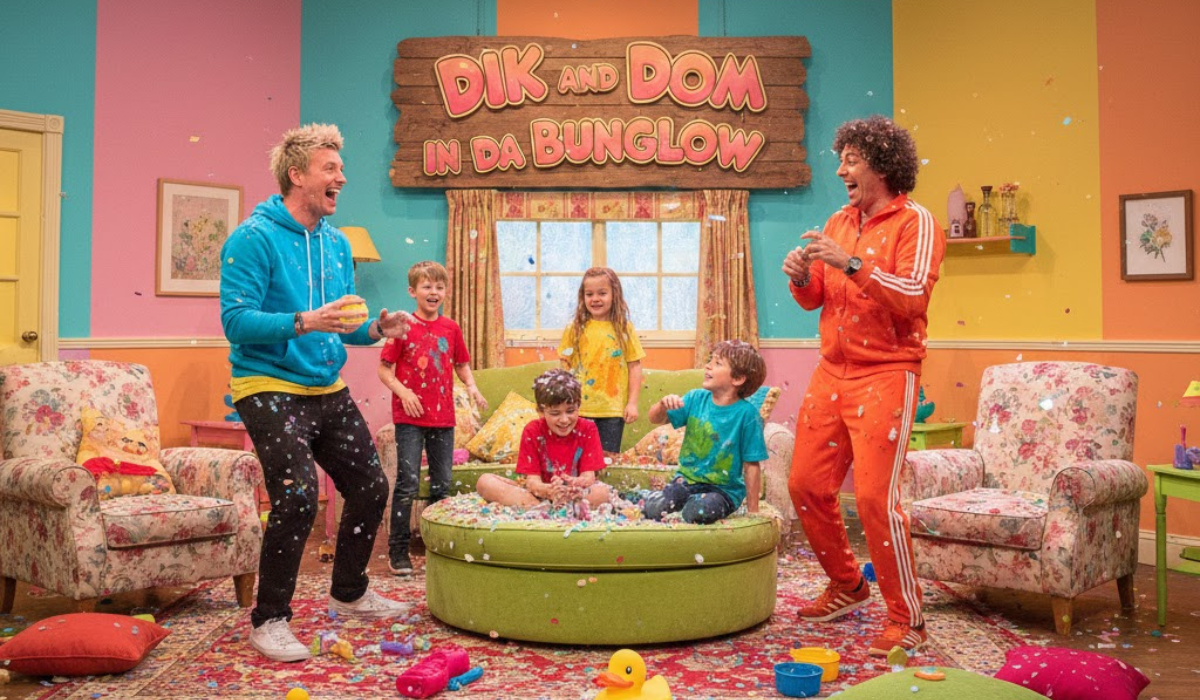
The early 2000s were a golden era for children’s television in the United Kingdom, with experimental formats, energetic presenters, and a willingness to break traditional rules of kids’ programming. Among the most memorable shows from that period was dik and dom in da bungalow, a lively and unpredictable program that captured the attention of young audiences through slapstick humor, audience participation, and mischievous fun. Even years after its original broadcast, the show remains a nostalgic touchstone for many viewers who grew up during that era.
This article explores the format, cultural impact, and enduring legacy of the program, examining why it still holds a special place in the hearts of fans today.
Origins and Creation of the Show
The series was fronted by the comedic duo Richard McCourt and Dominic Wood, whose energetic chemistry and playful rivalry became central to the show’s appeal. Their presenting style relied heavily on improvisation, physical comedy, and audience engagement, making the program feel spontaneous and unpredictable.
Although the show is often associated with British children’s programming broadly, its production connections with broadcasters such as CBBC and distribution on networks including Channel 4 helped it reach a wide audience. The creators aimed to design a program that felt less scripted and more like an interactive playground, where anything could happen live on air.
Unique Format and Structure
One of the defining characteristics of dik and dom in da bungalow was its unconventional format. Instead of a traditional studio environment, the show was set inside a brightly decorated “bungalow,” which served as a chaotic playground for games, sketches, and challenges.
Key Format Elements
1. Live Audience Participation
Children attending the studio became active participants rather than passive viewers. They competed in games, interacted with the hosts, and sometimes became part of comedic sketches. This produced a meaning of excitement and unpredictability.
2. Silly Games and Challenges
Many of the show’s segments revolved around messy, humorous competitions. These included physical challenges, prank-based activities, and absurd tasks that often resulted in laughter and chaos.
3. Recurring Catchphrases and Characters
Catchphrases became central to the show’s identity. Fans often remember the repeated jokes and playful banter between the hosts, which contributed to its cult following.
4. Slapstick Comedy
Physical humor—falling over, exaggerated reactions, and visual gags—was a constant element. This style appealed strongly to younger viewers while also entertaining older audiences through its self-aware silliness.
Why the Show Stood Out
At the time of its release, many children’s programs followed predictable formats with structured storytelling or educational components. Dik and dom in da bungalow broke away from that tradition by embracing chaos and humor as its primary focus.
Several factors contributed to its uniqueness:
- Unscripted Feel: Even when segments were planned, the hosts’ improvisational delivery made it feel spontaneous.
- Relatable Humor: The presenters behaved more like mischievous older siblings than authority figures, which resonated with children.
- Energy and Pace: The fast-moving structure kept audiences engaged, with little downtime between segments.
- Audience Empowerment: Giving children the chance to participate directly created a sense of inclusion rarely seen in similar programs.
Cultural Impact on Children’s Television
The influence of dik and dom in da bungalow extended beyond its immediate broadcast years. It helped redefine what children’s entertainment could look like, proving that high-energy humor and interactive elements could be just as engaging as scripted storytelling.
Influence on Later Programming
Many later children’s shows adopted similar approaches, including:
- Increased presenter interaction with audiences
- Messy or physical challenges
- Comedy-driven formats rather than purely educational content
The program also contributed to a shift in how presenters were perceived. Instead of authoritative hosts, they became playful entertainers who shared the same sense of humor as their audience.
Nostalgia and Fan Memories
For those who watched the show during childhood, memories of dik and dom in da bungalow often evoke strong nostalgia. This nostalgia is tied not only to the humor but also to the cultural moment in which the show aired—Saturday mornings, family living rooms, and the excitement of watching live television.
Fans frequently recall:
- Iconic catchphrases
- Memorable games and messy challenges
- The unpredictable nature of each episode
- The chemistry between the hosts
Nostalgia plays a powerful role in maintaining the show’s legacy, with online discussions and retrospectives continuing to appear years after its original run.
Educational Value Beneath the Chaos
Although primarily comedic, the show also had subtle benefits for young viewers:
- Confidence Building: Audience participants learned to engage in front of cameras.
- Social Interaction: Team-based games encouraged cooperation.
- Creativity: Absurd challenges promoted imaginative thinking.
- Humor Appreciation: Exposure to comedic timing and improvisation helped develop a sense of humor.
These elements contributed to the program’s broader appeal beyond simple entertainment.
Criticism and Controversy
Like many unconventional children’s programs, dik and dom in da bungalow faced occasional criticism. Some parents and commentators questioned whether the chaotic humor encouraged disruptive behavior in children.
However, supporters argued that the show provided harmless fun and a safe outlet for silliness. Over time, it became widely recognized as an iconic example of early 2000s children’s television rather than a controversial one.
Enduring Legacy
Even though the show is no longer airing, its influence remains visible in several ways:
- Continued fan discussions online
- References in popular culture and comedy
- Recognition as a defining children’s program of its era
- Ongoing careers of the presenters in media and entertainment
The lasting affection audiences feel demonstrates how impactful children’s television can be when it combines creativity, humor, and relatability.
Conclusion
Dik and dom in da bungalow represents more than just a children’s television show—it symbolizes a moment in entertainment history when creativity and chaos combined to produce something truly memorable. Its mix of slapstick humor, audience participation, and energetic presenting created a viewing experience that still resonates with audiences today.
For many viewers, the program remains a joyful reminder of childhood laughter, weekend mornings, and the excitement of unpredictable television. Its legacy continues to influence children’s entertainment and serves as proof that sometimes the most chaotic ideas can leave the strongest impressions.
FAQs
1. What was dik and dom in da bungalow about?
It was a children’s television program featuring games, comedy sketches, and audience participation led by two energetic presenters in a playful bungalow-themed set.
2. When did the show originally air?
The show aired in the early 2000s, becoming particularly popular during that period among children and pre-teens.
3. Why was the show so popular?
Its popularity came from its fast-paced humor, interactive format, memorable catchphrases, and the chemistry between the hosts.
4. Was the show educational?
While primarily comedic, it encouraged confidence, teamwork, creativity, and social interaction through its games and audience involvement.
5. Is the show still available to watch?
Although it is no longer broadcast regularly, clips and references can still be found through various media platforms and fan communities.
6. What made it different from other kids’ shows?
Its chaotic, unscripted feel and heavy audience participation set it apart from more structured children’s programs of the time.
7. Why do people still talk about it today?
Nostalgia plays a major role. Many viewers who grew up with the show remember it fondly as part of their childhood experience.