

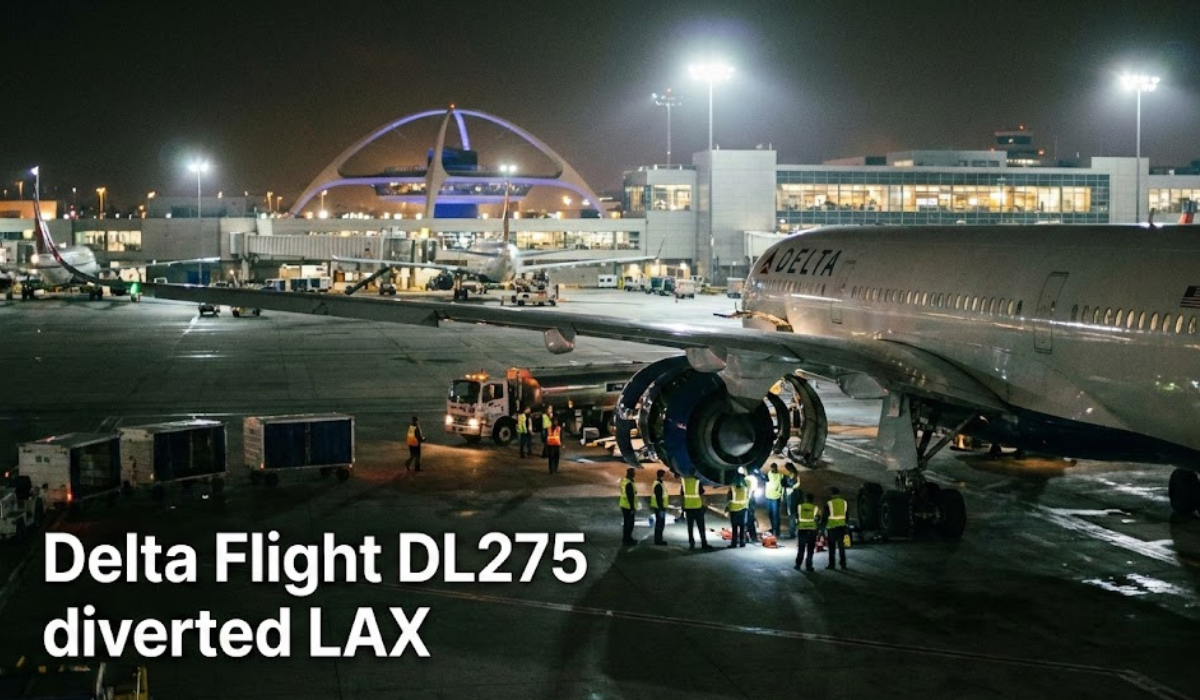
The phrase “Delta Flight DL275 diverted LAX” quickly became a topic of discussion among travelers and aviation watchers in May 2025. What began as a routine long-haul journey from Detroit to Tokyo turned into an unexpected landing at Los Angeles International Airport (LAX), leaving passengers confused and curious about what had gone wrong mid-flight. While diversions can feel alarming to those onboard, they are often the result of carefully planned safety decisions rather than emergencies.
This article breaks down exactly why Delta Flight DL275 diverted LAX, how aviation safety systems guided the crew’s actions, why Los Angeles was chosen as the diversion airport, and what this incident reveals about modern long-haul airline operations.
The Planned Route of Delta Flight DL275
Delta Flight DL275 was scheduled to operate a nonstop international route from Detroit Metropolitan Wayne County Airport (DTW) to Tokyo Haneda Airport (HND). This transpacific journey typically takes more than 13 hours and crosses remote regions where diversion options are limited. Because of the distance involved, long-haul aircraft are subject to some of the most rigorous safety monitoring procedures in commercial aviation.
Flights like DL275 rely on continuous system checks, redundancy in critical components, and real-time communication between the cockpit, airline operations centers, and ground-based maintenance teams.
What Triggered the Diversion?
The reason Delta Flight DL275 diverted LAX was a malfunction detected in the aircraft’s engine anti-ice system. This system prevents ice buildup on engine components when flying through cold or moisture-rich air at high altitudes. Even if the issue does not immediately threaten flight safety, it is classified as critical because ice accumulation can interfere with engine airflow and performance over time.
Modern aircraft are designed to alert flight crews early when such systems show irregular readings. In this case, onboard diagnostics indicated that one engine’s anti-ice system was not operating within expected parameters.
Why Engine Anti-Ice Systems Are So Important
To understand why the crew chose diversion rather than continuation, it helps to understand how engine anti-ice systems work.
At cruising altitudes, temperatures can drop well below freezing. Moisture in the air can freeze on engine inlets or internal components. Anti-ice systems use hot air or electrical heating to prevent ice formation. If a system is unreliable, regulations typically prohibit extended operations over remote areas, especially oceans.
Continuing across the Pacific without a fully functional anti-ice system would have violated safety margins. As a result, the flight crew followed standard procedures and began planning a diversion.
Why Delta Flight DL275 Diverted LAX Instead of Returning to Detroit
One of the most common passenger questions after the incident was why the aircraft did not simply return to Detroit. The answer lies in geography, fuel planning, and operational efficiency.
At the time the issue was identified, the aircraft was already well into its westbound journey. Turning back would have added significant flight time and fuel consumption. Los Angeles, on the other hand, offered several strategic advantages:
- One of the largest Delta maintenance hubs on the West Coast
- Full technical capability to inspect and repair wide-body aircraft
- Customs and immigration facilities for international passengers
- Hotel and rebooking infrastructure for displaced travelers
Choosing LAX allowed Delta to manage both the technical and passenger service aspects of the situation more efficiently.
How the Crew and Airline Responded
Once the decision was made that Delta Flight DL275 diverted LAX, a coordinated response unfolded behind the scenes. The cockpit crew communicated with Delta’s operations control center, which began preparing ground resources at Los Angeles.
Passengers were informed mid-flight that the aircraft would land at LAX for safety reasons. While diversions can cause anxiety, clear communication plays a major role in maintaining calm onboard. Upon arrival, maintenance teams inspected the aircraft while customer service staff assisted passengers with rebooking, accommodations, and meal arrangements.
Was This an Emergency?
Despite public speculation, the diversion was precautionary, not an emergency. The aircraft landed safely and under full control. In aviation, precautionary diversions are considered a success story rather than a failure. They demonstrate that crews detected an issue early and acted conservatively to eliminate risk.
Incidents like this rarely make headlines unless they involve unusual routes or high-profile destinations, which is why the phrase “Delta Flight DL275 diverted LAX” gained traction.
What Passengers Experienced on the Ground
For passengers, the experience was inconvenient but managed within established airline protocols. After landing at LAX, travelers were either:
- Rebooked on later Delta flights to Tokyo
- Rerouted through partner airlines
- Provided overnight accommodations if necessary
While delays disrupted schedules, safety remained the primary concern. Airlines build contingency plans precisely for situations like this.
What This Incident Shows About Modern Aviation Safety
The fact that Delta Flight DL275 diverted LAX highlights several important truths about contemporary aviation:
- Aircraft systems are designed to detect problems early, often before passengers notice anything unusual.
- Flight crews are trained to err on the side of caution, especially on long-haul routes.
- Diversions are planned outcomes, not improvised reactions. Airports like LAX are pre-approved alternates for specific routes.
Rather than indicating danger, the incident reflects the layered safety approach that defines modern commercial flight.
Impact on Future Long-Haul Operations
Events like this are analyzed internally by airlines and manufacturers. Data from the anti-ice system malfunction will help engineers refine maintenance schedules, software alerts, and inspection procedures. While passengers may remember the inconvenience, aviation professionals view such diversions as valuable learning opportunities.
For travelers, the key takeaway is that diversions are a sign the system worked exactly as intended.
Final Thoughts
The story of Delta Flight DL275 diverted LAX is not about failure but about prevention. A complex aircraft detected a system irregularity, a trained crew followed established protocols, and a major international airport provided the resources needed to resolve the issue safely.
While no passenger hopes to experience a diversion, this incident serves as a reminder that safety decisions are made long before a situation becomes dangerous.
Frequently Asked Questions (FAQs)
Why did Delta Flight DL275 divert to LAX?
The flight diverted due to a malfunction in a critical engine anti-ice system, prompting a precautionary landing.
Was Delta Flight DL275 in danger?
No. The diversion was precautionary, and the aircraft landed safely without an emergency.
Why was Los Angeles selected as the recreation airport?
LAX offers extensive maintenance facilities, international passenger services, and operational support for wide-body aircraft.
Do diversions like this happen often?
They are uncommon but not rare. Diversions are part of standard aviation safety planning.
Did passengers receive compensation?
Compensation and accommodations depend on airline policy and individual circumstances, but passengers were assisted with rebooking and lodging.