

On May 27, 2025, United Airlines Flight UA770, traveling from Barcelona (BCN) to Chicago O’Hare International Airport (ORD), declared an emergency mid-flight and diverted to London Heathrow Airport (LHR). While airlines and aviation authorities have yet to release a full report, available information from credible aviation tracking sources, passenger accounts, and industry analysis help paint a clear picture of what led to this critical diversion.
Flight Overview
United Airlines Flight UA770 was operated aboard a Boeing 787-9 Dreamliner, one of the airline’s staple long-haul aircraft. Known for its fuel efficiency and advanced avionics, the Dreamliner is typically used for international routes between major global airports.
On this particular day, there were an estimated 257 passengers and approximately 12 cabin and flight crew members on board for a total of around 269 people. The flight departed Barcelona around mid-afternoon local time under clear weather conditions, without any known delays or operational issues.
Initial Emergency: Cabin Pressurization Alert
Midway through the flight, approximately 90 minutes after departure, the cockpit received a warning involving the cabin pressurization system. The pressurization system ensures that cabin air remains breathable at high altitudes a vital function during long-haul flights. A malfunction in this system can lead to hypoxia, a dangerous condition where oxygen levels become insufficient for passengers and crew.
While reports indicate that the warning was likely triggered by a sensor anomaly rather than a genuine depressurization event, the flight crew followed standard operating procedures. This meant:
- Monitoring the aircraft’s cabin pressure status closely.
- Initiating descent to a lower altitude if needed.
- Alerting air traffic control (ATC) of the situation.
The cabin did not experience a loss of pressure extreme enough to trigger the deployment of oxygen masks, suggesting the alert was precautionary rather than a confirmed failure.
Declaration of Emergency: Squawk Code 7700
Shortly after detecting the pressure system anomaly, the pilots set their aircraft’s transponder to Squawk 7700, a universal distress code used to signal a general emergency. When a pilot sets 7700, air traffic control across several sectors are made immediately aware that the aircraft requires special handling, including direct routing, priority over other flights, and the support of emergency services upon landing.
When Flight UA770 squawked 7700, the flight radar publicly displayed the emergency alert across multiple aviation tracking platforms. At this point, the pilots began diverting toward a suitable diversion airport based on several strategic factors, including:
- Distance to nearby airports.
- Availability of long runways.
- Presence of emergency response support.
- Airline and maintenance network access.
Why London Heathrow?
London Heathrow Airport was selected due to its operational capabilities and strategic position relative to UA770’s real-time flight path. Heathrow is one of the busiest and best-equipped airports in the world, with:
- Long runways capable of accommodating large widebody aircraft like the Boeing 787.
- Extensive emergency services including fire, medical response, and technical support.
- Several United Airlines partner facilities, including maintenance and rerouting support.
- Clear weather patterns and air traffic control resources capable of handling emergency operations without compromising other flights.
In many in-flight emergency scenarios even if the plane is headed west towards the United States a major European airport like Heathrow is chosen due to its infrastructure and proximity.
Landing and On-Ground Response
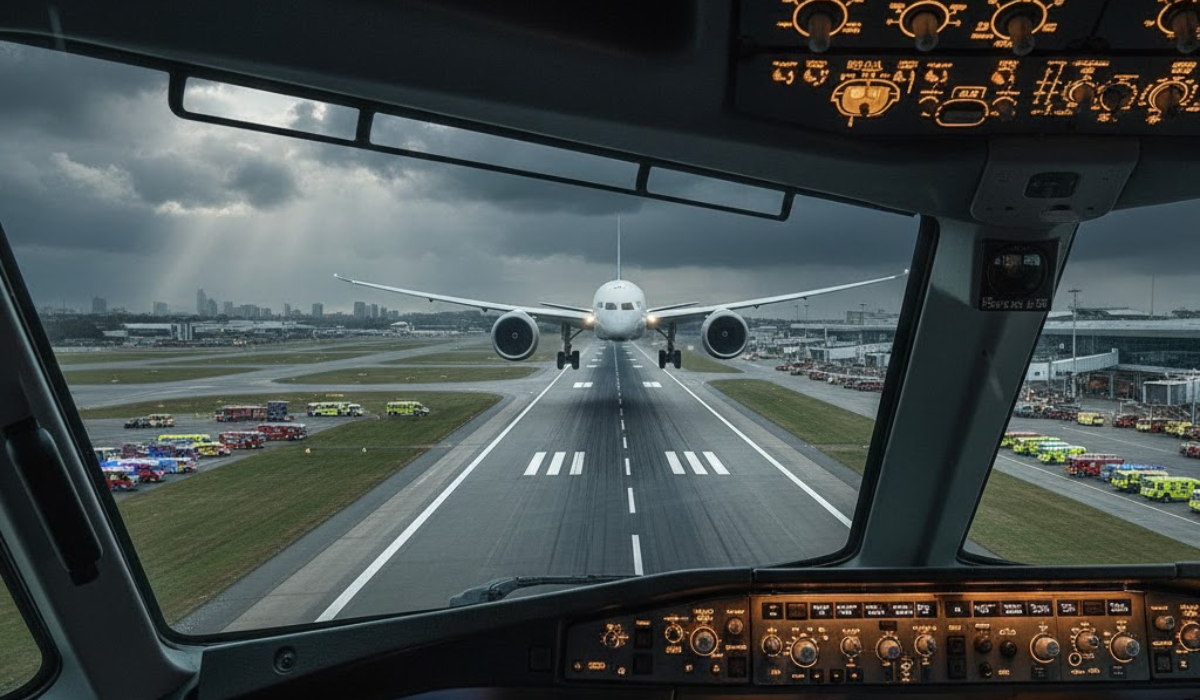
The descent into London was conducted without visible panic. Records indicate that UA770 landed safely on Runway 27R at Heathrow. The approach was monitored closely by emergency response units stationed on the airfield as a precaution.
After landing, the aircraft taxied under its own power to a terminal gate (believed to be in Terminal 2’s B gates area), where passengers and crew deplaned normally. No injuries were reported.
Once the aircraft was parked, United Airlines began systematically implementing passenger care protocols, which included:
- Facilitating rebooking for those whose travel plans were impacted.
- Offering meals and snacks for passengers waiting for new flight arrangements.
- Providing hotel accommodations for passengers whose onward travel could not be rebooked the same day.
- In some cases, offering bonus frequent flyer miles as a goodwill gesture.
Passengers reported that United staff, both in the air and on the ground, were supportive and helpful during the unexpected stop.
Passenger Experience and Crew Performance
From various passenger accounts gathered after the incident, most reported that:
- The descent and diversion felt unusual but controlled, with no sudden drops or chaotic maneuvers.
- Flight attendants and pilots communicated calmly and consistently, providing reassurance during the mid-flight change.
- Passengers remained mostly calm, with no reports of panic or confusion.
United’s flight crew, which would have included pilots certified for long-haul operations and a team of trained flight attendants, demonstrated commendable professionalism throughout.
Safety and Technical Analysis
Events like the UA770 emergency diversion showcase how modern aviation safety systems are designed and why they are so effective. Key components include:
1. System Redundancy
Modern aircraft like the 787 are equipped with multiple systems and sensors that monitor critical functions such as cabin pressure. Even a minor malfunction or sensor anomaly is flagged early thanks to such redundancy. In this case, the system did exactly what it is intended to do: alert the pilots to a potential problem before it could become dangerous.
2. Conservative Procedures
Even when an alert turns out to be false or minor, pilots are trained to take every warning seriously. This is especially true for issues involving cabin pressure, instrumentation, engine performance, or structural integrity.
3. Proper Use of Emergency Codes
By setting the squawk code to 7700, the flight crew initiated a coordinated response that extended from cockpit to control tower, ensuring the safest possible route and landing.
4. Emergency-Ready Routing
Choosing Heathrow optimized both safety and operational support. This shows the importance of having globally coordinated emergency infrastructure.
Why Such Diversions Matter
Aircraft diversions can be costly and inconvenient for both airlines and passengers. But they exist because safety is the core principle of air travel. While everything from mechanical anomalies to medical emergencies to bad weather can force a flight off course, swift and decisive action by flight crews prevents minor issues from turning into major catastrophes.
This specific event highlights the following safety lessons:
- Early detection and cautious response spared passengers from potential harm.
- Professional training for pilots and crew paid off in managing both safety and passenger confidence.
- Strong infrastructure, especially in airports like Heathrow, plays a crucial role in safely handling diversions.
The fact that everyone arrived safely, with no serious incidents, is proof that today’s aviation industry from aircraft technology to air traffic control is structured for safety above all else.
Frequently Asked Questions (FAQ)
Q: What does it mean when pilots “squawk 7700”?
A: “Squawk 7700” is the transponder code known as the general emergency code. It alerts air traffic control that the aircraft is facing a situation that needs urgent attention such as a mechanical fault, medical emergency, or other safety concern and requires immediate priority handling.
Q: Was there a loss of cabin pressure on UA770?
A: There was no full cabin depressurization. The alert was triggered due to a possible irregularity in the pressurization system, but the aircraft did not reach a stage requiring oxygen masks or emergency descent procedures.
Q: Why did the plane choose London Heathrow instead of turning back to Barcelona?
A: Heathrow was closer at the time of the emergency and better equipped to handle large aircraft and emergencies. Also, since the flight was crossing the Atlantic, it made more sense to divert ahead than backtrack.
Q: Did any passengers get hurt?
A: No injuries were reported.
Q: How often do emergency diversions like this happen?
A: While uncommon, diversions do occur in aviation, often as precautionary measures. They happen very rarely relative to the number of daily flights worldwide and usually for reasons ranging from health emergencies to mechanical alerts.
Q: Will passengers receive compensation?
A: Compensation policies vary, but in this case, United offered rebooking assistance, meals, lodging for those who needed to stay overnight, and in some cases, bonus miles as a goodwill gesture. The goal is always to minimize passenger pain when safety protocols disrupt travel.