

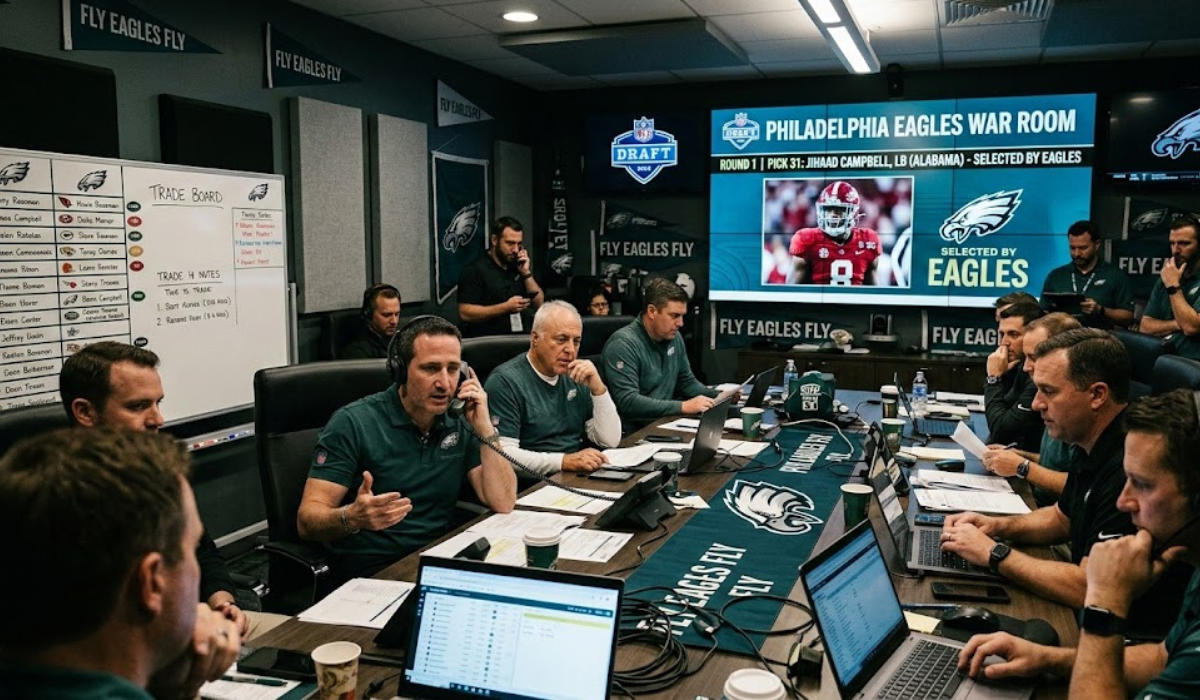
The eagles rookie trade attempt during the 2025 NFL Draft quickly became one of the most discussed strategic decisions of draft weekend. While some draft-night moves are flashy and headline-grabbing, this one stood out for a different reason: discipline. The Philadelphia Eagles demonstrated how to be aggressive without being reckless, ultimately securing their defensive target while protecting valuable draft capital.
This wasn’t a failed gamble. It was a controlled execution that reflected the long-term roster philosophy of the organization.
The 2025 NFL Draft Context
The 2025 NFL Draft presented a unique opportunity for teams seeking defensive upgrades. With several top-tier defensive prospects projected to go early, front offices across the league explored trade scenarios to move up the board.
Among those prospects was Alabama linebacker Jihaad Campbell, widely regarded as one of the most versatile defenders in the class. His speed, sideline-to-sideline range, and ability to cover in space made him a strong fit for modern NFL defenses.
The Eagles, holding the No. 32 overall pick, saw an opportunity but it required bold thinking.
The Attempt to Trade Into the Top 20
Reports indicated that Philadelphia explored a trade into the top 20, reportedly around pick No. 18. The goal was clear: secure Campbell before another team could select him.
This aggressive approach reflects how the Eagles operate under general manager Howie Roseman. The organization does not sit back passively when it identifies a difference-maker. Instead, it evaluates the cost and explores every available path.
However, moving into the top 20 typically requires significant compensation often including:
- Multiple premium draft picks
- Future first- or second-round selections
- Mid-round depth assets
When the asking price became too steep, Philadelphia chose not to overextend.
And that decision defines the eagles rookie trade attempt more than the trade itself.
Why the Eagles Walked Away
In modern roster construction, draft capital is currency. Overpaying for one player can create long-term gaps in depth and financial flexibility.
The Eagles evaluated the cost-benefit equation:
- Was Campbell a strong fit? Yes.
- Was he worth sacrificing multiple high-value future assets? No.
Instead of chasing the deal emotionally, the front office stepped back.
This restraint illustrates a core philosophy: build aggressively, but never recklessly.
The Strategic Pivot: Moving From No. 32 to No. 31
While the larger trade fell through, the Eagles remained attentive to the board. As the first round neared its conclusion, Campbell was still available.
Rather than forcing a massive move, Philadelphia executed a minor trade moving up one spot from No. 32 to No. 31.
That smaller adjustment ensured they secured their target without compromising future drafts.
In the end, the Eagles drafted Jihaad Campbell at No. 31 overall.
The sequence may not have carried the drama of a blockbuster move into the top 20, but strategically, it may have been more impressive.
What Jihaad Campbell Brings to Philadelphia
Campbell’s skill set fits the Eagles’ defensive blueprint:
1. Linebacker Depth and Versatility
Campbell can operate inside or outside, providing flexibility in multiple defensive fronts.
2. Coverage Ability
Modern NFL linebackers must cover tight ends and running backs in space. Campbell excels in this area, a trait highly valued in today’s pass-heavy league.
3. Speed and Range
His sideline-to-sideline mobility strengthens pursuit defense and limits explosive plays.
4. Long-Term Defensive Stability
Young, cost-controlled talent at linebacker allows the Eagles to allocate cap space elsewhere while maintaining defensive quality.
Protecting Quarterback Stability
While this move was defensively focused, its ripple effects impact the entire roster.
Strong linebacker play:
- Reduces time of possession for opposing offenses
- Creates more third-and-long situations
- Generates turnovers
This indirectly supports offensive stability, keeping pressure off the quarterback and preserving energy for late-game execution.
The Eagles understand that roster building is interconnected. Strengthening defense protects offense.
Preserving Future Draft Capital
One of the most important outcomes of the eagles rookie trade attempt was what didn’t happen.
The Eagles did not sacrifice future first- or second-round picks.
Maintaining draft capital ensures:
- Long-term roster depth
- Financial flexibility
- The ability to address future positional needs
- Continued competitiveness beyond a single season
Teams that repeatedly overpay in trades often face roster resets. Philadelphia avoided that trap.
A Pattern Under Howie Roseman
The eagles rookie trade attempt aligns with a broader pattern in Philadelphia’s draft strategy:
- Identify high-value targets.
- Explore aggressive options.
- Set strict compensation limits.
- Walk away if necessary.
- Capitalize when the board falls favorably.
This approach blends analytics with calculated risk-taking. It’s not about winning headlines it’s about sustaining contention.
Was This a Missed Opportunity?
Some critics initially questioned whether failing to move into the top 20 signaled hesitation. But the final outcome suggests otherwise.
The Eagles:
- Targeted their player.
- Evaluated trade costs.
- Refused to overpay.
- Secured the player anyway.
That is not a missed opportunity.
It is disciplined execution.
Defensive Impact Moving Forward
Adding Campbell strengthens:
- Linebacker rotation
- Sub-package flexibility
- Special teams coverage
- Injury insurance
Depth often determines playoff outcomes. Teams rarely win championships without strong second-level defenders.
This move reinforced both the present roster and long-term planning.
Lessons From the Eagles Rookie Trade Attempt
The sequence highlights several broader NFL team-building principles:
Aggression Must Have Boundaries
Exploring bold trades is necessary but discipline separates contenders from impulsive rebuilders.
Value Over Emotion
Draft night can be chaotic. Organizations that maintain valuation integrity typically outperform long term.
Depth Wins in December
Preserving picks ensures sustained talent pipelines.
Flexibility Is Power
Retaining draft assets provides leverage in future trades and roster moves.
Final Analysis
The eagles rookie trade attempt during the 2025 NFL Draft was not defined by failure to move into the top 20. It was defined by balance.
The Philadelphia Eagles aggressively pursued Jihaad Campbell, evaluated the market, and made a disciplined decision when compensation became excessive. Instead of forcing a deal, they adjusted strategy and still secured their target at No. 31.
By strengthening linebacker depth, reinforcing defensive versatility, protecting quarterback stability, and preserving future draft capital, Philadelphia improved both present performance and long-term flexibility.
This was not hesitation.
It was calculated control.
And that philosophy continues to define how the Eagles construct competitive rosters.
FAQs About the Eagles Rookie Trade Attempt
1. What was the “Eagles rookie trade attempt”?
It refers to the Philadelphia Eagles exploring a trade into the top 20 of the 2025 NFL Draft to select Jihaad Campbell before ultimately drafting him at No. 31 through a minor trade.
2. Why didn’t the Eagles complete the larger trade?
The compensation demands were considered too high, and the team chose not to sacrifice excessive future draft capital.
3. Who did the Eagles draft after the trade attempt?
They drafted Alabama linebacker Jihaad Campbell with the 31st overall pick.
4. Did the Eagles give up future first-round picks?
No. One of the key outcomes was preserving valuable future draft assets.
5. Why is this move considered successful?
Because the team secured its target player while maintaining long-term roster flexibility.
6. How does this impact the Eagles defense?
It improves linebacker depth, coverage ability, and defensive speed without compromising future roster development.