

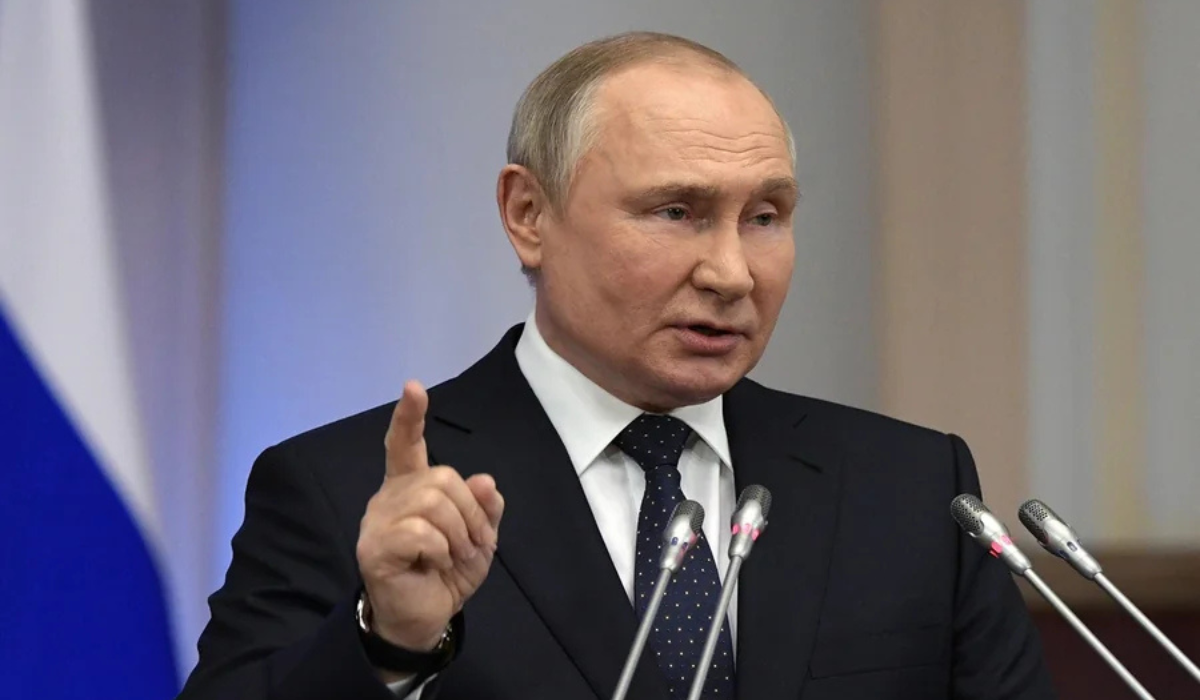
When we talk about political power, wealth is rarely far behind. Across the globe, heads of state range from modestly salaried public servants to individuals who control financial empires that dwarf the GDP of entire nations. But one name consistently rises to the top of every serious ranking: Vladimir Putin, President of Russia — widely regarded as the richest president in the world, with an estimated net worth that analysts place anywhere between $70 billion and $200 billion.
This is not simply a story about money. It is a story about how political power, national resources, strategic influence, and decades of carefully constructed secrecy can converge into one of the most extraordinary accumulations of private wealth in modern history.
Who Is the Richest President in the World?
As of 2026, the title of richest president in the world belongs — by most credible estimates — to Vladimir Putin of Russia. His official government salary sits at approximately $140,000 per year, and his declared personal assets list little more than a modest apartment and two Soviet-era vehicles. Yet investigative journalists, financial analysts, and former intelligence officials tell an entirely different story.
Bill Browder, the former CEO of Hermitage Capital Management, testified under oath before the U.S. Senate Judiciary Committee that Putin’s estimated net worth may reach as high as $200 billion. If accurate, this figure would place him not merely at the top of a list of wealthy world leaders — it would make him one of the wealthiest human beings alive.
Other global leaders compete for prominence on this list. Hassanal Bolkiah, the Sultan of Brunei, commands wealth between $20–$30 billion. King Maha Vajiralongkorn of Thailand is estimated at $30–$40 billion. Donald Trump, the U.S. President, holds an independently verified net worth of approximately $7.2 billion, largely derived from real estate, branding, and cryptocurrency ventures. But none approach the sheer scale — real or alleged — of Putin’s financial empire.
The Architecture of Hidden Wealth
What makes Putin’s financial profile so uniquely fascinating — and so difficult to verify — is the complex architecture that surrounds it. Unlike a conventional billionaire whose assets are publicly traceable through company filings and stock disclosures, Putin’s alleged wealth operates through what experts describe as a “cobweb” of proxies, front companies, state-linked entities, and offshore financial structures.
Investigative reports, including those derived from the landmark Panama Papers leak, paint a vivid picture of how this system works. Associates and close allies — often former intelligence officers from the KGB era — are granted control over lucrative business interests in exchange for loyalty and informal financial arrangements that flow back to the Kremlin. Analysts use the Russian term krysha, meaning “roof,” to describe this system: political protection offered in exchange for financial tribute.
Russia’s energy sector sits at the heart of this architecture. Through alleged indirect stakes in companies like Gazprom and Rosneft — Russia’s largest natural gas and oil corporations — Putin is believed to benefit enormously from the country’s vast hydrocarbon wealth. These are not officially registered in his name. Instead, they are held through layers of trusted intermediaries whose fortunes rise and fall in direct proportion to their relationship with the Kremlin.
The Luxury Assets Reportedly Linked to Putin
While Putin publicly maintains a life of institutional austerity, leaked documents and investigative reporting suggest a very different private reality. Among the most striking assets reportedly associated with him:
- The Black Sea Palace: A sprawling 190,000-square-foot compound near Gelendzhik, valued at approximately $1.4 billion, is often described as “the new Versailles.” The estate includes a casino, a theater, a vineyard, an indoor ice rink, and private access to the Black Sea.
- Yachts: Multiple super-yachts are allegedly linked to Putin’s network, including the Graceful — a 270-foot vessel complete with a gym, spa, saloon, library, and a 49-foot indoor pool that can be converted into a dance floor.
- A Forest Compound: A 750-acre private compound outside Moscow, complete with a bathhouse, private fishery, farm, and waterfall access.
- A Fleet of Vehicles: Reports suggest a personal collection of over 700 cars, ranging from Soviet classics to modern luxury automobiles.
None of these assets are officially registered in Putin’s name. Each exists in the shadows of a carefully maintained financial system designed for maximum deniability.
How Wealth and Political Power Intertwine
Putin’s financial empire did not emerge overnight. It was constructed methodically over more than two decades in power, taking root during the turbulent aftermath of the Soviet Union’s collapse in the 1990s.
When state-owned enterprises were privatized throughout the 1990s, a select group of individuals — many with ties to the Soviet security apparatus — were positioned to absorb enormous economic assets at drastically undervalued prices. Putin, who rose through the KGB and later served as Director of the Federal Security Service (FSB) before becoming president in 2000, was uniquely placed within this ecosystem.
As his political authority consolidated, so did the financial networks around him. Today, analysts at institutions like the Carnegie Endowment for International Peace describe a system in which Russia’s elite owe their wealth directly to Putin’s personal patronage. When Western sanctions followed the 2022 invasion of Ukraine and international companies exited Russia, their assets were redistributed among a new class of loyalists — each one financially dependent on the Kremlin, and therefore personally invested in the regime’s survival.
This is the genius — and the danger — of the world’s most powerful financial empire tied to a single political leader. Wealth becomes a tool of political control, not merely personal enrichment.
Comparing the World’s Richest Leaders
While Putin occupies the top of most rankings, it is worth placing the broader list in context:
Vladimir Putin (Russia) — Estimated $70B–$200B. Wealth primarily alleged through energy sector stakes, real estate, and proxy holdings.
King Maha Vajiralongkorn (Thailand) — Estimated $30B–$40B. Controls the Crown Property Bureau, one of Asia’s largest royal investment portfolios.
Hassanal Bolkiah (Brunei) — Estimated $20B–$30B. Wealth derived from Brunei’s oil and gas revenues over decades of absolute rule.
Donald Trump (United States) — Approximately $7.2B as of 2026. Sources include real estate, the Trump brand, hotels, golf courses, and his cryptocurrency venture, World Liberty Financial.
Alexander Lukashenko (Belarus) — Estimated at $9B by some analysts, though these figures remain deeply contested.
Cyril Ramaphosa (South Africa) — Estimated $450M–$800M, derived from a genuine pre-political business career in mining and agriculture.
Recep Tayyip Erdoğan (Turkey) — Estimated around $500M, linked to real estate interests and decades of political influence.
The contrast is striking. Some leaders built wealth through legitimate entrepreneurship before entering public life. Others accumulated it through state mechanisms, resource control, or political patronage. The distinction matters enormously when evaluating the ethics and consequences of presidential wealth.
The Ethics and Controversy of Presidential Wealth
Being labeled the richest president in the world is rarely a neutral distinction. Across political science and governance literature, the accumulation of extreme personal wealth by a head of state raises fundamental questions about accountability, conflict of interest, and the concentration of power.
In democratic systems, even when presidential wealth is legally acquired, voters and oversight institutions scrutinize potential conflicts between personal financial interests and national policy decisions. Trump’s presidency, for instance, sparked significant legal and ethical debate about whether his business interests — particularly his hotels and golf courses — benefited from his occupancy of the White House.
In more authoritarian contexts, the concerns run deeper. Putin has faced consistent allegations from opposition figures, investigative journalists, and Western governments of using state resources to benefit himself and his inner circle. Figures like anti-corruption campaigner Alexei Navalny — before his imprisonment and subsequent death — dedicated entire investigative operations to documenting the alleged palace, yachts, and financial networks tied to Putin.
Similarly, leaders in resource-rich but transparency-poor nations — such as Teodoro Obiang of Equatorial Guinea, whose son faced international money laundering investigations — illustrate how presidential wealth can come at the direct expense of a country’s population.
What This Means for Global Economics
The financial empire of the world’s richest president does not exist in isolation. It intersects with global energy markets, geopolitical decisions, international sanctions regimes, and the global financial system in ways that affect millions of people.
Russia’s position as one of the world’s largest exporters of oil and natural gas means that any analysis of Putin’s alleged wealth is inseparable from global energy prices. When oil prices rise, the Russian state — and by extension, those who control its resources — grows wealthier. The revenues that flow through Gazprom and Rosneft shape both Russia’s domestic economy and its foreign policy ambitions.
The 2022 Ukraine invasion and the subsequent wave of Western sanctions demonstrated that hidden wealth can be surprisingly difficult to freeze or seize. Billions in Russian assets were blocked across European financial systems, yet analysts noted that the true depth of Putin’s personal financial network remained largely intact — protected by its opacity and the jurisdictional complexity of offshore structures.
Informational FAQs
Q: Who is the richest president in the world in 2026?
A: Vladimir Putin of Russia is widely considered the richest president in the world in 2026, with estimated net worth figures ranging from $70 billion to $200 billion based on analyses by financial experts and investigative journalists.
Q: How did Vladimir Putin accumulate his wealth?
A: Putin’s alleged wealth is believed to have accumulated through indirect stakes in Russia’s energy sector (particularly oil and gas companies), state-linked real estate, a network of loyal business proxies, and his decades-long control over Russia’s political and economic institutions.
Q: What is Putin’s official salary?
A: Putin’s officially declared annual salary is approximately $140,000. His official declarations list very modest personal assets, which stands in stark contrast to the billions analysts estimate he controls indirectly.
Q: Is Putin officially the wealthiest person in the world?
A: Not officially. Because Putin’s alleged wealth is held through proxies and undisclosed structures, it does not appear on formal wealth rankings like Forbes’s billionaire list. However, some analysts argue that if his alleged holdings were fully counted, he could rank among the wealthiest individuals on Earth.
Q: Who are some other notably wealthy world leaders?
A: Other wealthy leaders include King Maha Vajiralongkorn of Thailand (~$30B–$40B), Sultan Hassanal Bolkiah of Brunei (~$20B–$30B), Alexander Lukashenko of Belarus (~$9B estimated), and Donald Trump of the United States (~$7.2B).
Q: Why is it so difficult to determine a president’s true net worth?
A: Many world leaders, particularly those in authoritarian or resource-rich states, hold assets through complex offshore structures, proxy individuals, and state-linked entities that are not publicly disclosed. This makes independent verification extremely difficult.
Q: Does radical presidential wealth affect a country’s residents?
A: In many documented cases, yes. When a leader’s personal wealth is derived from state resources or political patronage rather than transparent enterprise, it can indicate systemic corruption, misallocation of national revenues, and suppression of economic opportunity for ordinary citizens.
Q: What role does Russia’s energy sector play in Putin’s alleged wealth?
A: Russia’s oil and gas industry — primarily through Gazprom and Rosneft — is considered the central source of the financial power allegedly surrounding Putin. These state-linked energy giants generate hundreds of billions in revenue, a portion of which is believed by analysts to flow into informal networks connected to the Kremlin.