

Few categories of jewelry carry as much layered meaning as pieces inspired by Buddhist iconography. Across centuries and continents, images of the Buddha, the lotus, the dharma wheel, and other sacred symbols have been translated into wearable form — first as devotional objects, then as protective amulets, and today as beloved expressions of spiritual identity and aesthetic sensibility. Understanding where Buddha jewelry comes from, what it meant to the people who first wore it, and why it continues to resonate so deeply in the modern world offers a window into one of humanity’s longest and most thoughtful relationships between spirituality and adornment.
Origins: Sacred Art in Ancient India
The story of Buddha jewelry begins not with jewelry at all, but with sculpture. In the earliest centuries of Buddhism — roughly the 5th to 3rd centuries BCE — the Buddha himself was rarely depicted in human form. Artists and craftspeople in ancient India used symbolic stand-ins: a footprint, an empty throne, a Bo tree, or the dharma wheel. This aniconic tradition reflected a philosophical reluctance to represent the Awakened One directly, as though no image could adequately contain the nature of enlightenment.
The shift toward anthropomorphic representations of the Buddha came gradually, gaining momentum during the Kushan Empire period in what is now northern India and modern-day Pakistan and Afghanistan, roughly between the 1st and 3rd centuries CE. It was here, in the ancient region of Gandhara, that sculptors — heavily influenced by Hellenistic artistic traditions brought east by Alexander the Great — began carving the Buddha in recognizably human form. These early depictions established the visual language that would spread across Asia: the ushnisha (the cranial protuberance symbolizing wisdom), elongated earlobes from years of wearing heavy royal jewelry before renunciation, downcast eyes in meditative calm, and the abhaya mudra — the gesture of reassurance with the right hand raised.
From these sculptural traditions, artisans began miniaturizing sacred imagery. Small gold, silver, and bronze pendants bearing the Buddha’s image or associated symbols began to appear, worn by monks, laypeople, and royalty alike as expressions of faith and personal protection.
“In Buddhist cultures across Asia, tattering the image of the Buddha was never very ornament— it was an act of devotion, a silent prayer carried close to the body throughout the rhythms of daily life.”
The Spread of Buddhist Iconography Through Asia
As Buddhism traveled the Silk Road and sea trade routes, its visual language adapted to each culture it encountered. In each region, local aesthetic traditions merged with Buddhist iconography to create distinctive jewelry traditions that persist to this day.
Thailand and Southeast Asia
Thai Buddhist amulets — known as phra phim — represent one of the most elaborate traditions of Buddha jewelry in the world. These small pressed-clay or metal tablets bearing the Buddha’s image have been produced in Thai temples for centuries, blessed by monks in elaborate ceremonies and worn around the neck by the faithful. The belief in their protective power is deeply embedded in Thai culture, and rare antique amulets can fetch extraordinary prices among collectors. Alongside these amulets, elaborate gold jewelry featuring seated Buddhas, nagas (sacred serpents), and lotus motifs was developed for royal courts and wealthy patrons, reflecting the union of Buddhist faith and royal authority.
China, Japan, and East Asia
In China, the thin smiling figure commonly called the “Laughing Buddha” — actually Budai, a beloved folkloric monk rather than Siddhartha Gautama — became an enormously popular image in jewelry and decorative arts. Jade, a material already deeply revered in Chinese culture for millennia, was frequently carved into Buddha and bodhisattva forms. In Japan, Buddhist devotional objects evolved alongside the country’s sophisticated metalworking traditions, producing extraordinarily refined pieces in gold, shakudo (an alloy of gold and copper), and other materials. Netsuke — small carved toggles used to secure pouches to kimono sashes — frequently depicted Buddhist figures and symbols, blending devotion with exquisite craftsmanship.
Tibet and the Himalayas
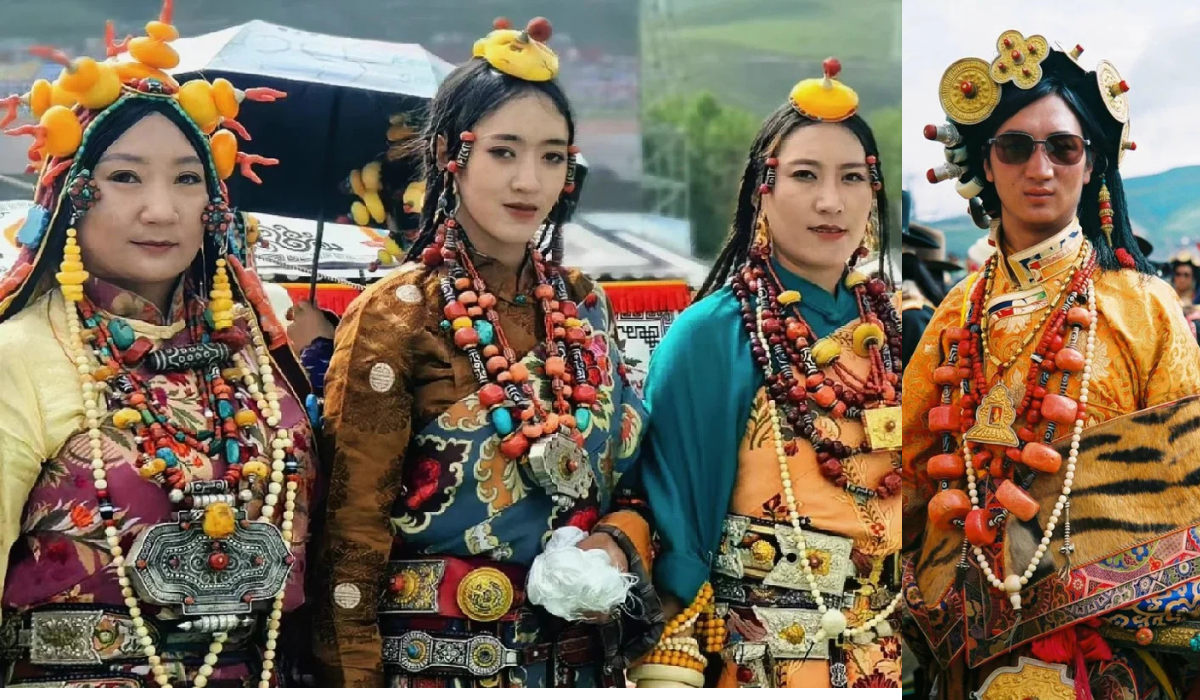
Perhaps nowhere did Buddhist jewelry develop more vividly than in Tibet and the surrounding Himalayan regions. Tibetan Buddhist jewelry is characterized by its bold use of turquoise, coral, amber, and silver — materials believed to carry their own spiritual properties — combined with imagery of Buddhas, bodhisattvas, dharma wheels, and protective deity figures. The ghau, a portable shrine-box worn around the neck containing sacred images and relics, represents one of the most significant forms of Buddhist jewelry in this tradition, functioning simultaneously as personal ornament and portable place of worship.
Key Symbols Found in Buddha Jewelry
- The Lotus (Padma): Symbolizes purity, spiritual awakening, and the ability to rise above worldly attachment — blooming from murky waters into unspoiled beauty.
- The Dharma Wheel (Dharmachakra): Represents the Buddha’s teachings and the path to enlightenment; one of the oldest Buddhist symbols.
- The Om Symbol: The primordial sound of the universe, widely associated with meditation and spiritual practice across Hindu and Buddhist traditions.
- The Endless Knot (Shrivatsa): A Tibetan Buddhist symbol representing the interconnectedness of all things and the infinite nature of the Buddha’s compassion.
- The Bodhi Leaf: A reminder of the tree beneath which the Buddha attained enlightenment — symbolizing wisdom, spiritual transformation, and awakening.
- The Laughing Buddha: Represents contentment, abundance, and good fortune; often confused with the historical Buddha but rooted in Chinese folklore.
Medieval and Colonial Period Transformations
The medieval period across Asia saw Buddhist jewelry reach extraordinary levels of refinement. Sri Lankan craftspeople produced intricate gold jewelry for temple offerings and royal courts, incorporating Buddhist iconography into complex filigree work. Burmese artisans developed a rich tradition of jewelry featuring the Buddha and associated Jataka tales — stories of the Buddha’s previous lives. In Cambodia, the splendor of the Khmer Empire produced temple complexes adorned with elaborate Buddhist and Hindu imagery, with devotional jewelry worn by the court reflecting both faiths simultaneously.
The encounter between Asian Buddhist traditions and European colonial powers in the 18th and 19th centuries had complex effects on Buddhist jewelry. On one hand, colonial disruption suppressed many traditional crafts and severed patronage networks. On the other hand, the global curiosity generated by this contact eventually introduced Buddhist imagery and aesthetics to Western audiences, planting seeds that would eventually flourish into today’s worldwide interest in Buddhist-inspired design.
The 20th Century: From Counterculture to Mainstream
The mid-20th century brought Buddhism and its visual language into direct contact with Western popular culture in a transformative way. The Beats of the 1950s — Kerouac, Ginsberg, and their circle — embraced Zen Buddhism as part of a broader rejection of postwar conformity. The 1960s counterculture expanded this interest, and suddenly images of the Buddha began appearing on everything from posters to jewelry worn by young Westerners seeking spiritual alternatives. This was a genuinely significant cultural moment: for the first time, Buddha imagery moved beyond communities with direct cultural connection to Buddhism and became part of a broader global spiritual vocabulary.
The New Age movement of the 1970s and 1980s further consolidated this trend, popularizing crystals, mandalas, and Buddhist imagery as part of a syncretic spiritual aesthetic. Jewelry incorporating Buddha heads, lotus flowers, and om symbols became staples of spiritual boutiques and craft markets across the Western world. The globalization of the 1990s and 2000s accelerated this process dramatically, as international travel, global media, and the internet made Buddhist art and culture accessible to anyone with curiosity.
The Modern Appeal of Buddha Jewelry
Today, Buddha jewelry occupies a fascinating and sometimes contested space in global culture. Its appeal is genuinely multidimensional — and understanding why so many people are drawn to these pieces requires looking at several distinct motivations that often overlap and intertwine.
Spiritual and Devotional Significance
For the hundreds of millions of practicing Buddhists worldwide, wearing Buddha jewelry remains a deeply meaningful act of faith. A small Buddha pendant worn close to the heart serves as a constant reminder of the values of compassion, mindfulness, and non-attachment that are central to Buddhist practice. For these wearers, the question of aesthetics is secondary — what matters is the spiritual intention the piece carries.
Protective and Talismanic Beliefs
Across many Buddhist cultures in Asia, the protective properties of Buddha imagery remain a living belief rather than a historical curiosity. Thai amulets continue to be sought for the protection they are believed to offer on journeys, in times of danger, or simply through the ordinary risks of daily life. This talismanic dimension gives Buddha jewelry a weight and seriousness that purely decorative jewelry lacks, grounding it in ancient human impulses around protection and luck.
Mindfulness and Wellness Culture
The extraordinary growth of mindfulness practice, yoga culture, and wellness-oriented lifestyles over the past two decades has created enormous interest in symbols and objects associated with these practices. For many people who may not identify as Buddhist but who practice meditation or value the philosophical insights of Buddhist thought, Buddha jewelry functions as a wearable reminder of mindfulness intentions — a tactile anchor to states of calm, presence, and self-compassion.
Aesthetic Appeal
It would be incomplete to ignore the purely aesthetic dimension of Buddha jewelry’s appeal. The visual language developed across centuries of Buddhist art is genuinely beautiful — the serene, symmetrical features of classical Buddha faces; the graceful geometry of lotus forms; the intricate symbolism of dharma wheels and endless knots. These are images refined through centuries of devotional craftsmanship, and their aesthetic power translates across cultural contexts. Many wearers are drawn to Buddha jewelry as art — beautiful objects that happen to carry deep historical and philosophical resonance.
✦ ✦ ✦
Materials and Craftsmanship in Contemporary Buddha Jewelry
Modern Buddha jewelry spans an extraordinary range of materials and price points. At the highest end, fine jewelry artisans work in gold, platinum, and precious gemstones — diamonds, rubies, sapphires, and emeralds — to create pieces that reflect both the ancient tradition of royal Buddhist patronage and contemporary luxury sensibilities. Jade Buddha pendants in particularly fine green material remain among the most prized jewelry items in Chinese and Southeast Asian communities.
At more accessible price points, silver has become the dominant metal for Buddha jewelry globally. Sterling silver’s combination of affordability, durability, and the attractive grey-white tone that complements the serene character of Buddha imagery makes it an ideal choice. Bronze and brass, which echo the ancient temple bells and sacred objects of Buddhist monasteries, also carry a warmth and historical resonance that many wearers find meaningful.
Natural materials maintain particular significance in Buddhist jewelry traditions. Rudraksha beads — seeds of the Elaeocarpus ganitrus tree, sacred in Hindu and Buddhist traditions — are strung into malas (prayer beads) worn around the wrist or neck. Sandalwood, with its gentle natural fragrance, carries associations with incense and meditation. Bodhi seed beads, derived from the tree family associated with the Buddha’s enlightenment, carry obvious symbolic weight. Turquoise, coral, and amber remain central to Himalayan Buddhist jewelry traditions, each carrying its own spiritual associations and aesthetic beauty.
Cultural Sensitivity and Respectful Engagement
Any honest discussion of Buddha jewelry in the modern world must acknowledge the questions of cultural sensitivity it raises. As Buddhist imagery has moved into global popular culture and fashion, concerns have been raised — particularly by Buddhist communities in Asia — about the appropriate treatment of sacred imagery. The commercialization of religious symbols, the placement of the Buddha’s image on objects considered disrespectful in Buddhist cultures, and the disconnection of imagery from its philosophical roots are all genuine concerns worth taking seriously.
The most thoughtful approach involves genuine curiosity and learning. Understanding what the symbols you wear actually mean — their history, their significance within Buddhist tradition, their proper use — transforms the relationship with Buddha jewelry from casual consumption to meaningful engagement. Many Buddhist teachers have expressed that sincere interest in and respect for Buddhist teachings and values is more important than questions of cultural origin, while still encouraging awareness of context and appropriate reverence.