

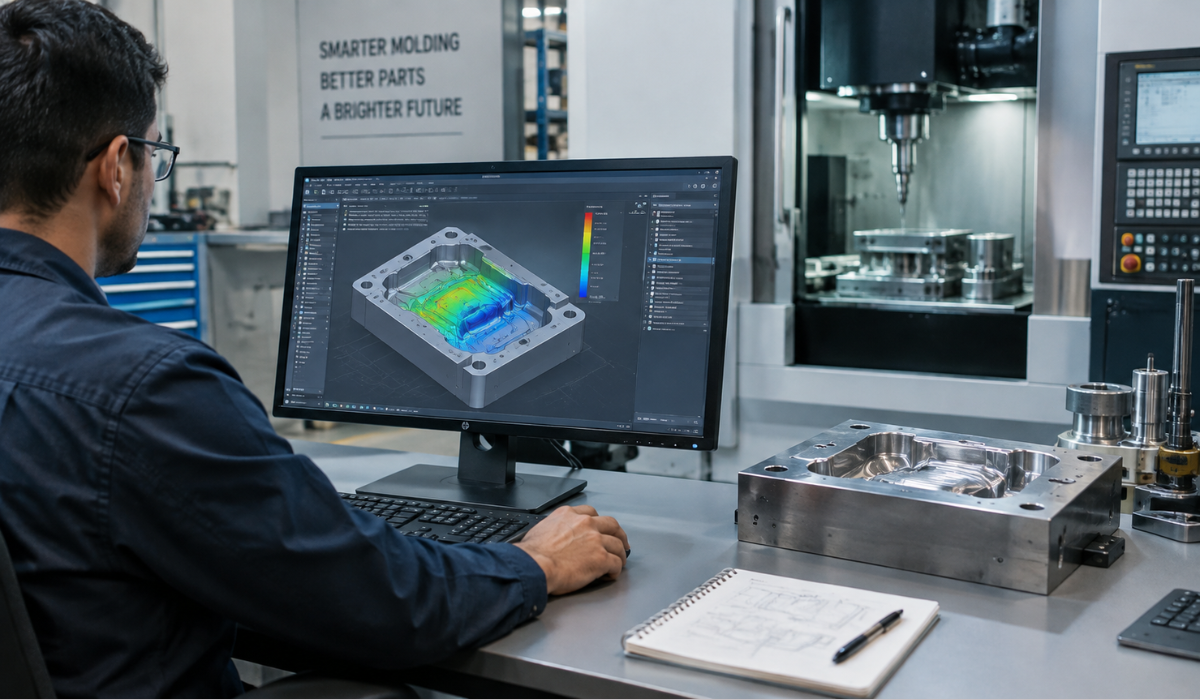
Manufacturing has always relied on molds to turn raw material into finished parts, but the way those molds are designed and produced is shifting. A concept known as RepMold represents this shift — an approach that blends artificial intelligence with precision fabrication to make mold production faster, more accurate, and less wasteful than traditional methods. Understanding how this approach works, and why it matters, helps explain a broader trend reshaping factories around the world: the move from manual, trial-and-error tooling toward data-driven, predictive manufacturing.
This article explains what RepMold-style systems do, how the underlying technology functions, and why industries from automotive to medical devices are paying attention.
What Is RepMold?
At its core, RepMold refers to a manufacturing approach that integrates AI-powered design software with high-precision fabrication equipment to streamline the entire mold-making lifecycle. Instead of treating design and production as separate stages, this method connects them through continuous digital feedback, allowing engineers to catch problems before a single physical mold is cut.
Traditional mold making is a slow, iterative process. A designer creates a mold concept, a prototype is machined, the mold is tested, flaws are identified, and the design is revised — often several times — before a usable mold exists. Each cycle costs time, material, and labor. RepMold-style systems compress this cycle by using intelligent algorithms to refine a design digitally, long before fabrication begins.
The Role of Artificial Intelligence in Mold Design
Artificial intelligence is the driving force behind this kind of system. Rather than relying solely on an engineer’s manual calculations, AI software processes complex geometric data to identify weak points, uneven stress distribution, and potential failure zones within a mold design.
This works in a few key ways:
- Geometric analysis: The software examines a mold’s shape and structure to detect areas prone to warping, cracking, or excessive wear.
- Stress simulation: Before any material is cut, the system models how forces will act on the mold during actual production use.
- Learning from historical data: By analyzing outcomes from previous production runs, the algorithms gradually improve their predictions, reducing design inconsistencies over time.
The result is a design process that behaves less like a one-time drafting exercise and more like an evolving system that gets smarter with every project it processes.
Reducing Human Error and Trial-and-Error Testing
One of the most time-consuming parts of conventional mold making is repeated physical testing. Every adjustment typically means re-machining a section of the mold and running another test cycle. This is expensive, slow, and leaves room for human error, especially with complex or highly detailed components.
AI-assisted design simulates mold performance and durability digitally before fabrication starts. Engineers can see how a mold will likely behave under real production conditions without needing to build and rebuild physical prototypes. This doesn’t eliminate physical testing entirely, but it significantly narrows the number of iterations needed, which shortens development timelines and reduces the chances of costly mistakes reaching the production floor.
Precision and Consistency Across Industries
Certain industries have very little tolerance for error. Automotive components, medical devices, aerospace parts, and precision electronics all require extremely tight manufacturing tolerances, sometimes measured in fractions of a millimeter.
AI-integrated mold systems are built to meet these demands by ensuring that once a digital mold profile has been optimized, it can be replicated with minimal variation across multiple production runs. This matters because manufacturers often need to produce thousands or even millions of identical parts, and even small inconsistencies between units can lead to failures, recalls, or safety concerns.
Consistency at scale is one of the more practical benefits of this approach — a validated digital design behaves as a repeatable template rather than a one-off blueprint that must be re-verified every time.
Faster Development, Lower Material Waste
Speed and sustainability are often treated as separate goals in manufacturing, but AI-driven mold design tends to improve both simultaneously. By optimizing geometry so that material is used only where structurally necessary, these systems help reduce scrap and excess material usage. Fewer failed prototypes also means less wasted raw material overall.
At the same time, shorter design-to-production timelines reduce energy consumption tied to repeated testing and rework. When a design is closer to correct on the first attempt, factories spend less time running machines on iterations that will ultimately be discarded.
Rapid Prototyping and Scalable Production
Because the design process happens largely in a digital environment, engineers can iterate on ideas quickly without committing to expensive tooling changes early on. This makes AI-assisted mold systems particularly useful for rapid prototyping, where speed and flexibility matter more than finalized production specs.
The same digital foundation that supports fast prototyping also supports large-scale manufacturing. Once a mold design has been validated, it can be reproduced reliably across high-volume production runs, which is essential for companies operating in global supply chains where consistency across multiple facilities is required.
Industry Applications
- Automotive: Faster component development and reduced cycle times help manufacturers keep pace with tight production schedules while maintaining strict quality standards.
- Medical devices: High-precision mold production supports the manufacturing of instruments and diagnostic equipment, where accuracy directly affects patient safety.
- Electronics and consumer goods: The ability to make rapid design changes supports shorter product cycles and greater customization, which is increasingly important in fast-moving consumer markets.
- Aerospace: Tight tolerances and rigorous quality requirements benefit from digital validation before physical fabrication begins.
RepMold and the Broader Shift Toward Smart Manufacturing
This approach fits within a larger trend often described as Industry 4.0 — the integration of data, automation, and connected systems into manufacturing environments. As factories increasingly rely on real-time data and predictive analytics, AI-driven mold design contributes to a more data-informed production floor, one where decisions are based on historical performance data rather than guesswork alone.
Importantly, systems like this are generally designed to support human expertise rather than replace it. Engineers still make key decisions, but they do so with better information, fewer blind spots, and more reliable simulations to guide their choices.
Conclusion
RepMold-style manufacturing represents a meaningful shift in how molds are designed, tested, and produced. By combining artificial intelligence with precision fabrication, this approach reduces the reliance on repeated physical testing, improves consistency across large production runs, and lowers material waste. For industries where tolerances are tight and consistency is non-negotiable — automotive, medical, aerospace, and electronics among them — this kind of data-driven design process offers a more efficient alternative to traditional trial-and-error tooling. As manufacturing continues to move toward smarter, more connected systems, approaches built on AI-assisted design are likely to become a standard part of how molds and precision components are developed.
Frequently Asked Questions (FAQs)
1. What is RepMold in simple terms? RepMold refers to an AI-assisted approach to mold design and fabrication that uses intelligent algorithms to optimize a mold’s design digitally before physical production begins, reducing the need for repeated manual testing.
2. How does AI improve mold design? AI analyzes geometric data, identifies stress points, and simulates how a mold will perform under real conditions. It also learns from past production data, which helps improve accuracy and reduce design inconsistencies over time.
3. Does this approach eliminate physical testing entirely? No. Physical testing and validation are still part of the process, but digital simulation significantly reduces how many testing cycles are needed, since many design flaws can be identified and corrected beforehand.
4. Which industries benefit most from AI-driven mold design? Industries with strict precision requirements tend to benefit the most, including automotive, medical devices, aerospace, and electronics manufacturing, where tight tolerances and consistency are essential.
5. How does this method reduce material waste? By optimizing mold geometry so material is used only where structurally necessary, and by reducing the number of failed prototypes, less raw material is wasted during the design and testing phases.
6. Is AI-assisted mold design only useful for large-scale manufacturing? No. It is also well-suited to rapid prototyping, since digital designs can be iterated on quickly without the cost of repeated physical tooling changes. It scales effectively from small prototype runs to large production volumes.
7. Does AI replace the role of mold design engineers? Generally, no. These systems are designed to support engineers by providing better simulations, data, and predictive insights, allowing them to make more informed decisions rather than removing their role in the process.
8. How does this relate to Industry 4.0? AI-driven mold design fits within the broader Industry 4.0 movement, which emphasizes data-driven decision-making, automation, and connected manufacturing systems to improve efficiency and predictability across production processes.