

When Christopher Nolan announced that Anne Hathaway would be playing Selina Kyle — better known as Catwoman — in The Dark Knight Rises (2012), the internet erupted. Fans were skeptical. How could the actress best known for The Devil Wears Prada and The Princess Diaries step into one of DC’s most seductive, morally complex characters? What followed was one of the most quietly brilliant casting decisions in modern superhero cinema. Years later, her portrayal continues to be discussed, analyzed, and celebrated as a high-water mark for female characters in the genre.
The Weight of Legacy: Who Came Before Her
To understand the magnitude of what Anne Hathaway accomplished, you have to acknowledge the shadows she walked into. Catwoman has had a rich life on screen before 2012.
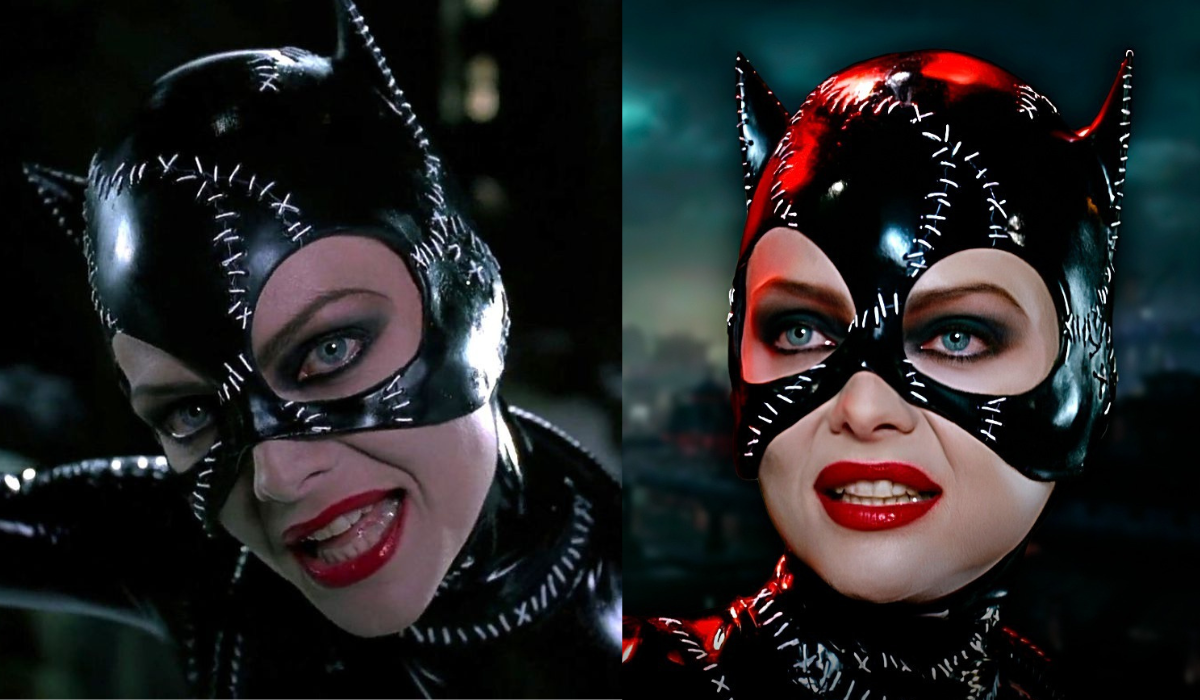
Eartha Kitt brought sharp wit and magnetic danger to the role in the 1960s Batman television series. Julie Newmar before her defined the cat-like grace and playful menace that became the character’s visual shorthand. Then came Michelle Pfeiffer in Tim Burton’s Batman Returns (1992) — a performance so intensely raw and surreal that it achieved near-mythological status among fans. Pfeiffer’s Catwoman was fractured, fetishistic, and unforgettable.
These were enormous shoes to fill. And Hathaway, to her credit, never tried to fill them. She made her own.
Selina Kyle, Not Catwoman: Nolan’s Reframing
One of the most telling creative decisions in The Dark Knight Rises is that the word “Catwoman” is never spoken aloud in the film. Hathaway plays Selina Kyle — a highly skilled thief operating in Gotham with her own moral compass, survival instincts, and deeply personal motivations. The “Catwoman” identity exists more in the audience’s cultural memory than in the text of the film itself.
This was entirely intentional. Christopher Nolan and his co-writer Jonathan Nolan built the entire Dark Knight trilogy on a philosophy of grounded realism. The villains have tactical motivations. The heroes carry psychological wounds. There is no camp, no fourth wall, no winking at the audience. By stripping away the explicit “Catwoman” label, they allowed Hathaway to construct a human being first and an icon second.
The character’s costume reflects this philosophy perfectly. Rather than the latex bodysuit of Pfeiffer or the exaggerated design of the 2004 Halle Berry film, Hathaway’s Selina wears a sleek, understated black suit with practical goggles that flip upward to resemble cat ears. The outfit is functional, believable within the film’s world, and still visually arresting. It whispers rather than shouts.
The Performance Itself: What Hathaway Brought to the Role
What makes Hathaway’s portrayal so compelling is the intelligence she layers into every scene. Selina Kyle in this film is a woman who has spent her life being underestimated — by Gotham’s elites, by criminals, and by Bruce Wayne himself. She weaponizes that underestimation constantly.
In her very first scene, she plays a frightened maid to perfection, deceiving Bruce Wayne in his own mansion while lifting his fingerprints and his mother’s pearls. The moment she drops the act and walks away with effortless poise, Hathaway signals precisely what kind of character this will be: someone who performs vulnerability as a tool while keeping her true self locked away.
This idea — performance as survival — runs through the entire character. Selina shifts registers constantly: charming socialite, street-hardened thief, reluctant ally, ruthless pragmatist. What anchors the character is that beneath every mask, there is a woman who genuinely wants a clean slate. Her motivation is not power or revenge or ideology. She wants to erase her past and start over. That is a deeply human desire, and Hathaway communicates it even in moments where Selina would never say it aloud.
Her chemistry with Christian Bale’s Bruce Wayne is another crucial element. Their dynamic is one of equals who do not fully trust each other — two people operating with incomplete information, circling the truth about one another. Their dialogue is sharp and loaded with subtext, and Hathaway matches Bale’s intensity without being overshadowed. In a film that also features Tom Hardy delivering a theatrical, physically dominant performance as Bane, that is no small feat.
Physical Preparation and the Action Sequences
Anne Hathaway underwent serious physical training for the role. She worked with fight choreographers and trainers for months, learning a fighting style that emphasised speed and agility over brute strength — appropriate for a character defined by cat-like reflexes rather than Batman’s more punishing combat approach.
The results are visible on screen. Her action sequences have a different rhythm from the film’s other fights. Where Batman slugs and endures, Selina ducks, redirects, and vanishes. The rooftop chase sequence early in the film and her combat scenes in Gotham’s streets carry a kinetic energy that feels distinct. She rides the Batpod — a vehicle previously associated exclusively with Batman — with such convincing ease that it feels less like a hand-off and more like a natural inheritance.
Hathaway has spoken in interviews about how much the physical work informed the character. Getting comfortable in the suit, learning to move in heels while maintaining the character’s predatory stillness — these details fed directly into how Selina Kyle carries herself throughout the film.
The Moral Complexity: Neither Hero Nor Villain
What separates Hathaway’s Selina Kyle from many female characters in superhero films of the same era is her moral opacity. She is not a love interest who becomes a hero. She is not a villain redeemed by romance. She operates entirely on her own terms, and her decisions throughout the film are driven by self-interest that gradually — and convincingly — evolves into something closer to conscience.
She sells Bruce Wayne’s fingerprints to Bane’s associates, setting in motion much of the film’s catastrophe. She is not ignorant of the potential consequences. She simply prioritises her own survival. Later, when Gotham is genuinely in danger, her decision to return and help is not presented as obvious or easy. She almost escapes. She makes a choice.
That choice lands because Hathaway has done the groundwork. The audience understands that Selina’s capacity for selfishness is real — which makes her selflessness in the final act meaningful rather than obligatory.
Critical and Cultural Reception
At the time of the film’s release, critical opinion on Hathaway’s performance was warm to enthusiastic. Many reviewers who had harboured doubts before seeing the film admitted that she was among the most compelling elements of an already ambitious production. The Guardian, The New York Times, and numerous other publications highlighted her as a standout.
In the years since, the assessment has only grown more positive. As conversations about female characters in superhero cinema have deepened — particularly regarding agency, complexity, and how women are written in relation to male protagonists — Hathaway’s Selina Kyle is frequently cited as a benchmark. She is a female character whose arc does not revolve around the male lead, even while their stories are intertwined.
The performance also helped reframe Hathaway’s public image. In 2012, she was at a curious moment in her career — talented and successful, but not universally beloved by the press or public in the way she perhaps deserved to be. The response to her Catwoman performance was a reminder of what she is capable of when given material that challenges her.
Anne Hathaway’s Catwoman in the Broader DC Landscape
It is worth situating Hathaway’s portrayal within DC’s complicated cinematic history. The Dark Knight trilogy stands as perhaps the most critically acclaimed run of superhero films ever made. Within that trilogy, her Selina Kyle is the only major female character with genuine agency and screen time. She is not a damsel, not decoration, and not defined by her relationship to a male character.
When you compare her to subsequent DC characters some of whom have been well-served by their films, others less so — Hathaway’s work holds up as a model of how to integrate a complex female character into an ensemble blockbuster without sacrificing her individuality.
Fans have long speculated about whether Selina Kyle’s story could ever continue in some form, though the closed nature of Nolan’s trilogy makes this unlikely. What exists is complete: a beginning, middle, and an end that leaves Selina exactly where she chose to be.
The Image That Stays With You
There is a moment late in The Dark Knight Rises when Selina sits across from Bruce Wayne in a café in Florence. The city is sunny, the war is over, and two people who have both been carrying enormous weight are simply sitting together. Hathaway conveys in a glance — relief, surprise, and something tentatively like peace — more than most actors manage in a full speech.
That is the image that lingers. Not the catsuit, not the goggles, not the Batpod. A woman who spent an entire film running, finally still.
Informational FAQs
Q1: Who played Catwoman in The Dark Knight Rises? Anne Hathaway played Selina Kyle, the character widely known as Catwoman, in Christopher Nolan’s The Dark Knight Rises (2012).
Q2: Why is Catwoman never called “Catwoman” in the film? Christopher Nolan deliberately avoided the name to keep the film grounded in realism. The character is referred to only as Selina Kyle throughout, consistent with the trilogy’s approach of treating comic book archetypes as real people rather than costumed legends.
Q3: How did Anne Hathaway prepare for the Catwoman role? Hathaway underwent extensive physical training, including fight choreography and stunt preparation. She has spoken about how the physical demands of the role — particularly learning to move and fight in heels — informed the way she developed Selina Kyle’s on-screen presence.
Q4: How does Hathaway’s Catwoman compare to Michelle Pfeiffer’s? Both performances are highly regarded, but they serve very different stories. Pfeiffer’s Catwoman in Batman Returns is surreal, wounded, and operatically stylised. Hathaway’s is grounded, calculating, and pragmatic. Neither is a direct successor to the other — they are two distinct interpretations of the same source material.
Q5: Was Anne Hathaway’s casting controversial? Yes. When the casting was first announced, many fans questioned whether she was the right fit for the role. By the time the film was released, the majority of that scepticism had been replaced by admiration for her performance.
Q6: Did Anne Hathaway win any awards for playing Catwoman? While she did not win major awards specifically for this role — her Oscar came the same year for Les Misérables — her Catwoman performance received widespread critical praise and is often cited as one of the strongest female performances in superhero cinema.
Q7: Will Hathaway ever return as Catwoman? There are no confirmed plans. Nolan’s Dark Knight trilogy was designed as a complete, self-contained story, and the ending of The Dark Knight Rises provides narrative closure for Selina Kyle’s journey.
Q8: What makes Selina Kyle’s character arc meaningful in the film? Selina begins the film as a morally ambiguous thief motivated entirely by self-preservation. Her evolution into someone willing to risk herself for others is earned gradually through the narrative, making her final choices feel genuine rather than forced by plot requirements.