

“Prenatal” just means before birth. In practice, it’s the whole bundle of checkups, tests, supplements and conversations that surround a pregnancy. Most people searching for the word want one of three things: when to book the first appointment, what to take, or whether something they’re feeling is normal. You can explore more Pureprenatal Vitamins information and helpful guidance at pregnancy nutrition.
This guide covers all three, starting with the one that can’t wait.
Quick answer: when should prenatal care start?
As soon as you know you’re pregnant, or suspect it. You don’t need to wait for a perfect moment, and you don’t need a confirmed ultrasound first.
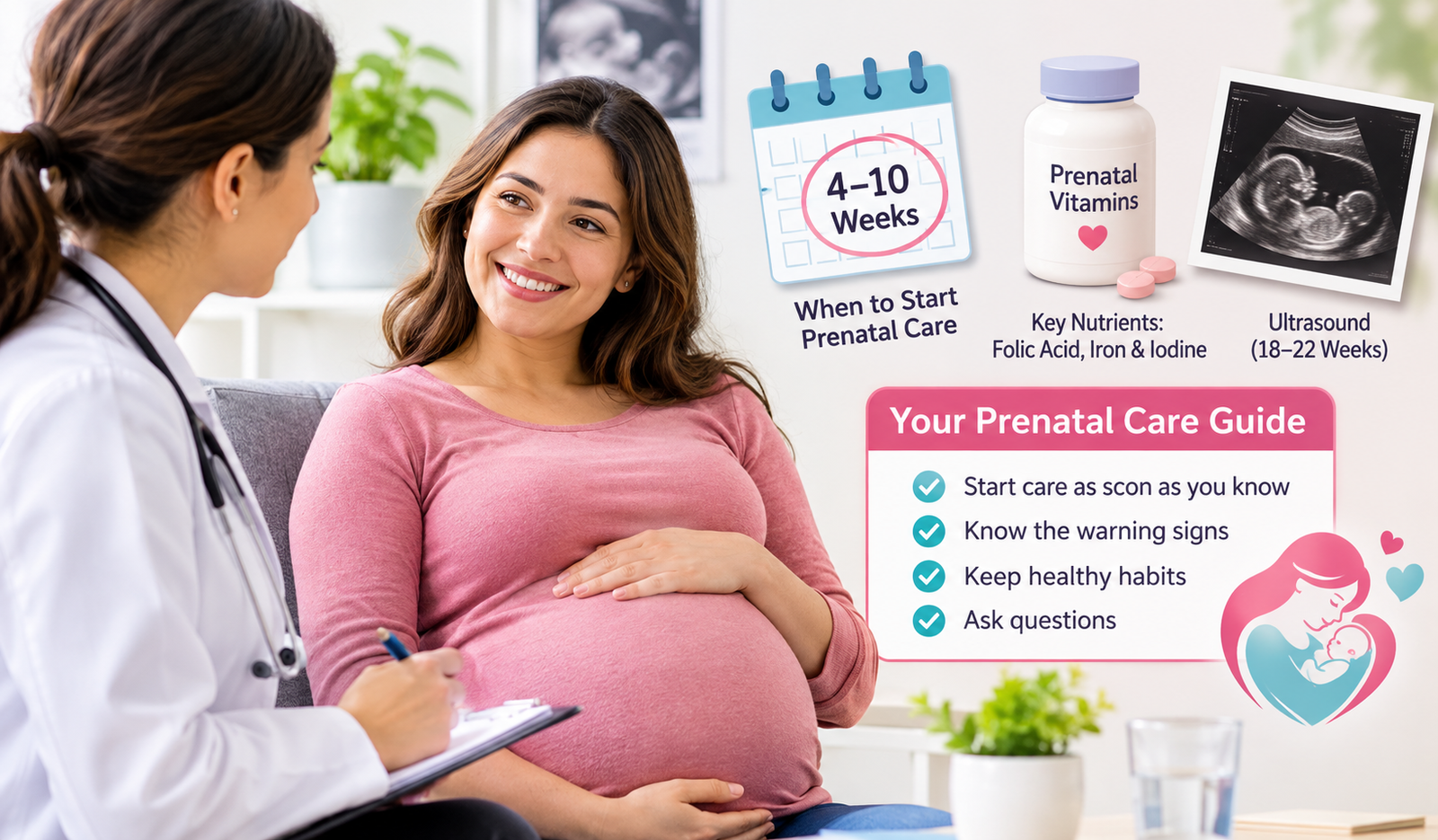
Many practices schedule the first visit somewhere between 4 and 10 weeks. One health system tells patients to book anywhere from four weeks, shortly after a missed period, up to ten weeks, regardless of risk. Others won’t see you in the office until around week eight. If you’re nauseated to the point of vomiting, bleeding, or taking medication for a chronic condition, say so when you call. Some practices will offer an earlier appointment in those situations.
Why prenatal care is worth the time
It’s tempting to skip visits when you feel fine, especially in a second or third pregnancy. But the point of prenatal care is catching things you can’t feel. Some people develop medical problems during pregnancy, and regular care allows early detection and treatment before those problems become more serious.
Think of the visits as a series of small, boring checks: blood pressure, weight, urine, the baby’s growth. Boring is the goal. When one of those numbers shifts, you’ll know weeks earlier than you otherwise would.
Who provides prenatal care?
You have more choices than people expect. Your first visit might be with a midwife, an obstetrician, a family medicine doctor, or a nurse practitioner. Some areas also offer group prenatal care, where several people at a similar stage meet together with a provider. Mayo Clinic lists group care as one valid option alongside individual visits.
The right choice depends on your health history, your insurance, and where you plan to deliver. If you have a high-risk pregnancy, a maternal-fetal medicine specialist may join your team. Pick someone you can actually talk to. You’ll be asking a lot of questions.
What happens at your first prenatal visit
Set aside extra time. It’s usually the longest appointment of the pregnancy.
Expect a thorough health history: past pregnancies, surgeries, family conditions, medications. Your provider will likely ask about your emotional wellbeing too, and check your weight, blood pressure, heart, lungs, thyroid and breasts. You’ll have blood and urine tests, and your provider will estimate a due date. That date is an estimate of delivery, not a promise.
Bring a written list of questions. Everyone forgets half of them in the room.
Your prenatal appointment schedule
For years, the standard pattern for a low-risk pregnancy looked like this:
| Stage of pregnancy | Typical visit frequency |
|---|---|
| Weeks 4 to 28 | Every 4 weeks |
| Weeks 28 to 36 | Every 2 weeks |
| Week 36 to delivery | Weekly |
That’s the traditional schedule many clinics still follow. It adds up to roughly a dozen or more visits. 8 Best Prenatal Vitamins for First Trimester in 2026: Expert Guide
Here’s the part that’s changing. In April 2025, ACOG recommended a tailored approach, with the schedule shaped by each person’s medical and social needs. The pandemic pushed that rethink along, with more attention to at-home monitoring, telemedicine and targeted visits. So your calendar may look different from what a friend described. If you have diabetes, high blood pressure, twins, or a history of complications, expect.
One milestone shows up almost everywhere: ACOG recommends at least one ultrasound between 18 and 22 weeks. That’s the detailed anatomy scan, and it’s often the appointment people remember most.
Prenatal vitamins: what to look for on the label
This is where the aisle gets confusing. A prenatal vitamin is, at heart, a multivitamin with more of the nutrients pregnancy demands. But there’s no strict rule about what a bottle must contain to wear the word “prenatal.” Minnesota’s health department notes that no nutrient requirements exist for a product to carry the label.
So read the facts panel, not the front of the bottle. The three nutrients that matter most:
- Folic acid. Anyone who could become pregnant is advised to take 400 mcg daily, starting before conception. It lowers the risk of neural tube defects, which affect the baby’s brain and spine. ACOG’s pregnancy target is 600 mcg of folate a day from all sources, with 400 mcg coming from a supplement.
- Iron. Your blood volume expands in pregnancy, so iron needs climb. A common benchmark on prenatal labels is 27 mg.
- Iodine. The same benchmark list gives 150 mcg. People often forget this one.
A few practical notes. Gummy prenatals often leave out iron, which matters if you’re prone to anemia. If swallowing a large pill makes you gag, a gummy plus separate iron (ask your provider first) can beat not taking anything. Also, quality varies. A GAO lab review found that 11 of 12 prenatal products tested had at least one nutrient outside acceptable deviation from its label value. Look for third-party testing marks such as USP or NSF.
And don’t self-prescribe big doses. Up to 4,000 mcg of folic acid is sometimes recommended after a previous neural tube defect, but only on a doctor’s advice. More isn’t automatically better.
If you’re still trying to conceive, the answer is yes, start now. Neural tube development happens very early, often before a pregnancy test turns positive.
Prenatal testing and screening: two different things
This trips up almost everyone, so it’s worth slowing down.
| Screening tests | Diagnostic tests | |
|---|---|---|
| What they tell you | The chance of a condition | Whether a condition is present |
| Examples | NIPT (cell-free DNA blood test), first-trimester screening, ultrasound | Chorionic villus sampling (CVS), amniocentesis |
| Risk to pregnancy | None | Small risk of pregnancy loss |
| Typical timing | From about 10 weeks for NIPT | CVS at 10 to 13 weeks, amniocentesis at 15 to 20 weeks |
Screening tests carry no risk to the pregnancy, while diagnostic tests are more definitive but invasive. A positive screen is not a diagnosis. ACOG stresses in bold type that cell-free DNA testing is not equivalent to diagnostic testing. False positives happen, which is why a high-risk result leads to a conversation about confirmation rather than a conclusion.
On who should be offered what: ACOG says all patients should be offered both screening and diagnostic tests, and every patient has the right to accept or decline after counseling. Its guidance also says cfDNA screening should be discussed with everyone early in pregnancy, regardless of age or baseline risk.
You can say no to any of it. Plenty of people decline genetic prenatal testing, and plenty say yes to everything. Neither is wrong. What matters is that you understand what the result can and can’t tell you before the blood is drawn.
Prenatal warning signs you shouldn’t wait on
Most pregnancies are uneventful. Still, a short list of symptoms should never get a “let’s see how I feel tomorrow.” The CDC’s Hear Her campaign lists urgent maternal warning signs, including:
- A severe headache that won’t go away or keeps getting worse, dizziness or fainting, and changes in vision
- Vaginal bleeding or fluid leaking, swelling, redness or pain in a leg, extreme swelling of the hands or face, and overwhelming tiredness
- Thoughts about harming yourself or your baby
That last one belongs on the list, and it’s often the one people hide. Mental health is part of prenatal care, and your provider has heard it before.
If you can’t reach your provider, go to an emergency room or call 911, and tell them you’re pregnant or were pregnant within the last year. That list isn’t exhaustive. If something feels wrong and it isn’t on any list, call anyway. It’s worth the call.
Everyday prenatal habits that help
Beyond appointments and supplements, the basics still carry weight. Eat regular meals, even when nausea makes that hard. Stay hydrated. The CDC advises avoiding tobacco, maintaining a healthy weight, and taking care of your mental health as part of reducing complications. Ask your provider which medications, foods and kinds of exercise are right for your situation, since the answer shifts with your health history. Don’t rely on a general list for that.
Frequently asked questions
Do I need prenatal care if this isn’t my first pregnancy?
Yes. Prenatal care matters even if you’ve been pregnant before and feel fine, and people who receive it have fewer problems in pregnancy, labor, delivery and the postpartum period.
Can I take regular multivitamins instead of prenatal vitamins?
Sometimes, but check the amounts of folic acid, iron and iodine first. Ask your provider before swapping.
Are prenatal tests mandatory?
No. Testing is offered, and you choose. You can decline any of it.
What if I can’t afford prenatal care?
People without coverage for pregnancy can contact their local health department or family planning clinic, or a state prenatal care hotline, to learn about available programs.
Is it too late to start prenatal care in the second or third trimester?
It’s never too late to start. Earlier is better, but a late first visit still beats none.
Bottom line
Book the visit when you suspect you’re pregnant. Start a prenatal vitamin with folic acid, iron and iodine, ideally before conception. Treat screening results as odds, not verdicts. And learn the warning signs now, while nothing’s wrong.