

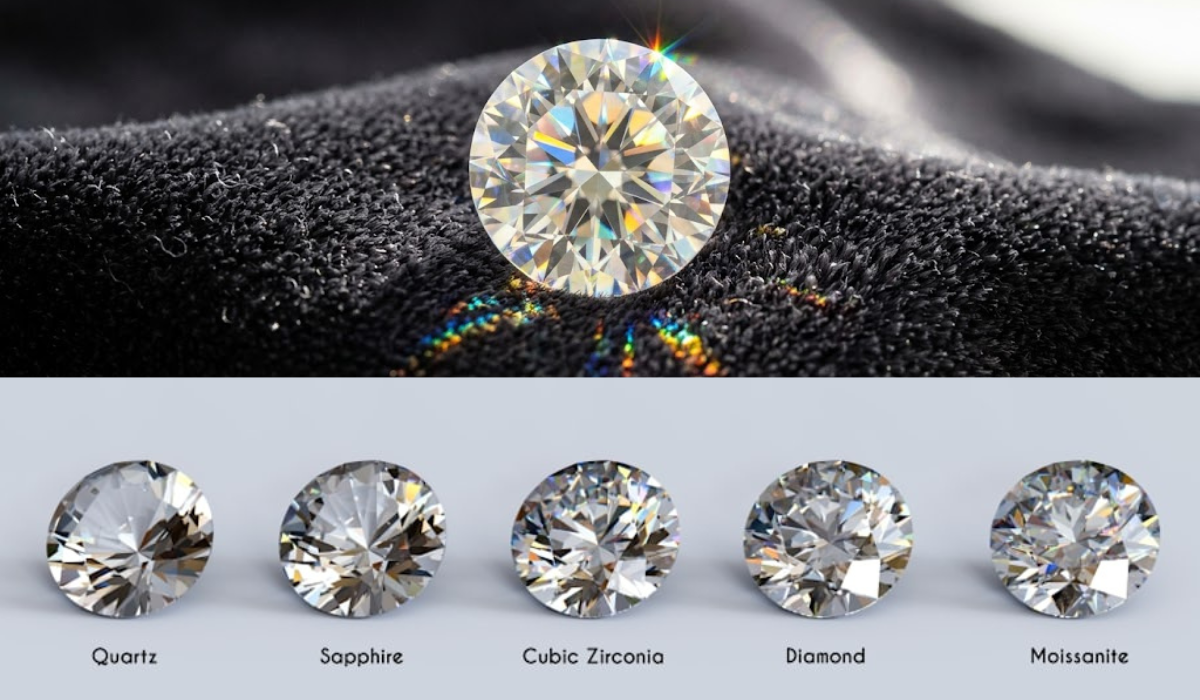
If you’ve spent any time browsing gemstones, you’ve probably come across the term “moissanite” and wondered what it actually is. Unlike many popular stones that have been mined and worn for centuries, moissanite has a relatively short and fascinating history rooted in science rather than tradition. This article breaks down what moissanite is, where it comes from, how it compares to other well-known gemstones, and why it has become a topic of growing interest among gem enthusiasts and curious shoppers alike.
The Origin Story Behind Moissanite
Moissanite gets its name from French chemist Henri Moissan, who discovered tiny mineral fragments in 1893 while examining rock samples from a meteor crater in Arizona, now known as Meteor Crater or Canyon Diablo. At first, Moissan believed the crystals he found were diamonds, given their brilliance and hardness. It wasn’t until years later, after more advanced analysis, that the mineral was correctly identified as silicon carbide, a compound that had never before been found in nature in this crystalline form. The mineral was officially named moissanite in his honor in the early twentieth century.
This origin matters because it explains why moissanite is often associated with cosmic or extraterrestrial material. Natural moissanite is so rare that finding gem-quality natural specimens large enough for jewelry is essentially impossible. Almost everything you see in jewelry stores or online today is created in a laboratory rather than mined from the earth.
What Exactly Is Moissanite Made Of?
At its core, moissanite is composed of silicon carbide, a compound made of silicon and carbon atoms arranged in a crystal lattice. This composition is fundamentally different from diamond, which is made entirely of carbon. The distinct atomic structure of silicon carbide gives moissanite its own unique set of optical and physical properties, which is part of why it isn’t simply a diamond substitute but a gemstone in its own right.
Naturally occurring moissanite has been found in extremely small quantities in certain meteorites and in a handful of geological formations, including some kimberlite deposits and even areas associated with ancient volcanic activity. Because natural samples are too small and rare for commercial jewelry, scientists developed methods to grow silicon carbide crystals in controlled laboratory environments, which is how the moissanite available today is produced.
How Lab-Created Moissanite Is Made
The process of creating moissanite involves growing silicon carbide crystals under carefully controlled heat and pressure conditions that mimic, in a much faster and more efficient way, the natural processes that might produce the mineral underground or in space. This lab-grown approach allows for consistent quality, predictable clarity, and a steady supply, which would be impossible if jewelers had to rely on naturally occurring moissanite alone.
It’s worth noting that lab-created doesn’t mean fake. The crystal structure, chemical composition, and physical properties of laboratory-grown moissanite are identical to what would occur naturally. The only difference is the origin of formation, not the authenticity of the mineral itself.
Moissanite vs Diamond: Key Differences
One of the most common reasons people research moissanite is to understand how it compares to diamond, since the two stones can look similar to the untrained eye. There are several measurable differences worth understanding.
In terms of hardness, diamond sits at a perfect 10 on the Mohs scale, while moissanite measures around 9.25. Both are considered extremely durable for everyday wear, but diamond technically holds the title for the hardest known natural material.
When it comes to optical performance, moissanite actually has a higher refractive index than diamond. This means light bends more dramatically as it passes through the stone, producing more visible flashes of rainbow-colored light, sometimes called fire. Diamonds tend to display a more balanced mix of white brilliance and colored fire, while moissanite often shows noticeably more colorful sparkle under certain lighting conditions.
Weight and density also differ. Moissanite is lighter than diamond, meaning a moissanite stone of the same physical dimensions as a diamond will weigh less in carats. This is an important detail for anyone comparing stones by carat weight rather than visual size.
Another interesting distinction involves thermal and electrical conductivity. Both diamond and moissanite conduct heat extremely well, which historically made it difficult for basic diamond testers to distinguish between the two. Modern testing devices now also measure electrical conductivity, since moissanite conducts electricity in a way that diamond does not, allowing gemologists to tell them apart more reliably.
Color and Clarity in Moissanite
Early moissanite production sometimes resulted in stones with a faint yellow or greenish tint, which was a noticeable characteristic in earlier generations of the gemstone. Advances in manufacturing technology have significantly improved color consistency over time, with many modern moissanite stones appearing nearly colorless under standard lighting.
Grading moissanite differs somewhat from the grading systems used for diamonds. While diamonds are evaluated using the well-known four Cs of carat, cut, color, and clarity through standardized laboratories, moissanite grading tends to be less standardized across the industry, though reputable producers still evaluate clarity and color consistency before stones reach the market.
Durability and Everyday Wearability
Given its hardness rating of 9.25, moissanite is considered highly resistant to scratching and suitable for daily wear, including in rings and other jewelry that experience regular contact and friction. It resists chipping and maintains its polish well over time when cared for properly.
General care for moissanite is similar to caring for other hard gemstones. Cleaning with mild soap and warm water, avoiding harsh chemical exposure, and storing pieces separately to prevent scratching against other jewelry are all reasonable practices to preserve the stone’s appearance over the years.
Common Misconceptions About Moissanite
A frequent misunderstanding is that moissanite is simply a “fake diamond.” In reality, moissanite is a distinct mineral with its own chemical identity, not an imitation of diamond. It existed in nature long before anyone used it in jewelry and has its own scientific classification entirely separate from diamond.
It’s also sometimes confused with cubic zirconia, another diamond alternative. However, the two are chemically and physically different. Cubic zirconia is made of zirconium dioxide and is considerably softer, while moissanite’s silicon carbide composition gives it greater hardness and a higher refractive index, resulting in different visual characteristics and durability over time.
Another misconception is that moissanite loses its sparkle or “clouds up” with age. Under normal wear and proper care, the optical properties of moissanite remain stable, since they are tied to its fixed crystal structure rather than something that degrades through ordinary use.
How Moissanite Is Used Today
Beyond jewelry, silicon carbide, the compound that makes up moissanite, has significant industrial applications unrelated to gemstones entirely. It is widely used in abrasives, semiconductors, and high-temperature electronic components due to its hardness and thermal properties. The gem-quality version used in jewelry represents only a small, specialized application of a material that plays a much larger role in manufacturing and technology industries.
Environmental Considerations
Because nearly all moissanite available today is created in laboratories rather than mined, it generally involves a different environmental footprint compared to traditional gemstone mining, which can involve significant land disturbance and resource use. Lab-grown production methods allow for more controlled and predictable manufacturing processes, which is part of why moissanite has drawn interest from people curious about gemstone origins and production methods.
Frequently Asked Questions
What’s a moissanite in simple terms? Moissanite is a gemstone made of silicon carbide, a mineral first discovered in meteorite fragments in 1893. Most moissanite available today is created in laboratories rather than mined from the earth.
Is moissanite a real gemstone or just a synthetic imitation? Moissanite is a real, scientifically recognized mineral with its own distinct chemical composition. It is not an imitation of another stone; it has existed naturally, even if in extremely small amounts, separate from any connection to diamond.
How can you tell moissanite apart from a diamond? Moissanite has a higher refractive index than diamond, producing more visible rainbow-colored flashes of light. It is also slightly softer and lighter in weight, and modern testing devices can distinguish the two based on electrical conductivity.
Does moissanite change color or turn yellow over time? Under normal conditions and proper care, moissanite’s color remains stable. Some older or lower-quality stones from early production methods may have shown a yellow or green tint, but this is tied to the original stone quality rather than aging or wear.
Is moissanite as hard as a diamond? Moissanite measures 9.25 on the Mohs hardness scale, while diamond measures a perfect 10. Both are considered very durable for everyday wear, though diamond remains the hardest known natural material.
Can moissanite pass as a diamond on basic tests? Older thermal diamond testers sometimes confused moissanite with diamond because both conduct heat well. Modern testers that also measure electrical conductivity can reliably distinguish between the two stones.